The best GoPro accessories for snorkeling
Snorkeling breaks footage in four specific ways: you cannot hold the camera steady, everything turns blue, the housing fogs, and a dropped camera sinks. These six picks are ordered by how much of that each one fixes.
Part of Gear.
We earn a commission if you buy through our links, at no extra cost to you. It never changes what we recommend or the order we rank it in — how this works.
The GoPro The Handler floating hand grip is the first accessory to buy for snorkeling, because snorkeling is handheld filming and a bare camera in a wet hand is both hard to aim and easy to lose. It floats bright-orange-end-up when you let go, and its quick-release base moves the camera to a chest or deck mount without tools. After that, a red filter is the accessory that changes what the footage looks like - the PolarPro DiveMaster set is the one that publishes a depth range per filter, including a snorkel filter for the 5-15ft band where most people actually film. GoPro Anti-Fog Inserts are the cheapest item here and fix the problem that ruins the most clips, and a GoPro Floaty is the retention you want on the camera itself. The Protective Housing is the one pick most snorkelers should skip: if your camera is already rated past 10m bare, a sealed case adds fog risk and muffled audio for depth you will not use. Every price on this page comes from the live price layer with the date it was read.
01
Quick picks
| # | Product | Best for | Score | Price |
|---|---|---|---|---|
| 01 | 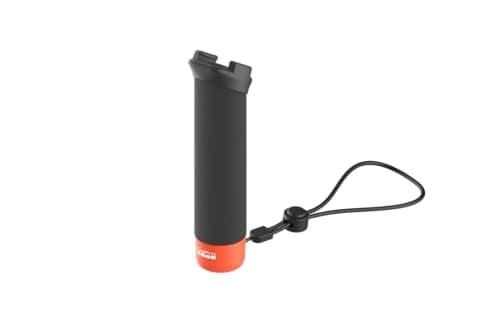 GoPro The Handler Floating Hand Grip A grip that floats bright-orange-end-up when you drop it, with a quick release so the camera moves to a mount without tools. | Handheld water shots — snorkeling, swimming, filming from the boat | 8.2/ 10 | |
| 02 | 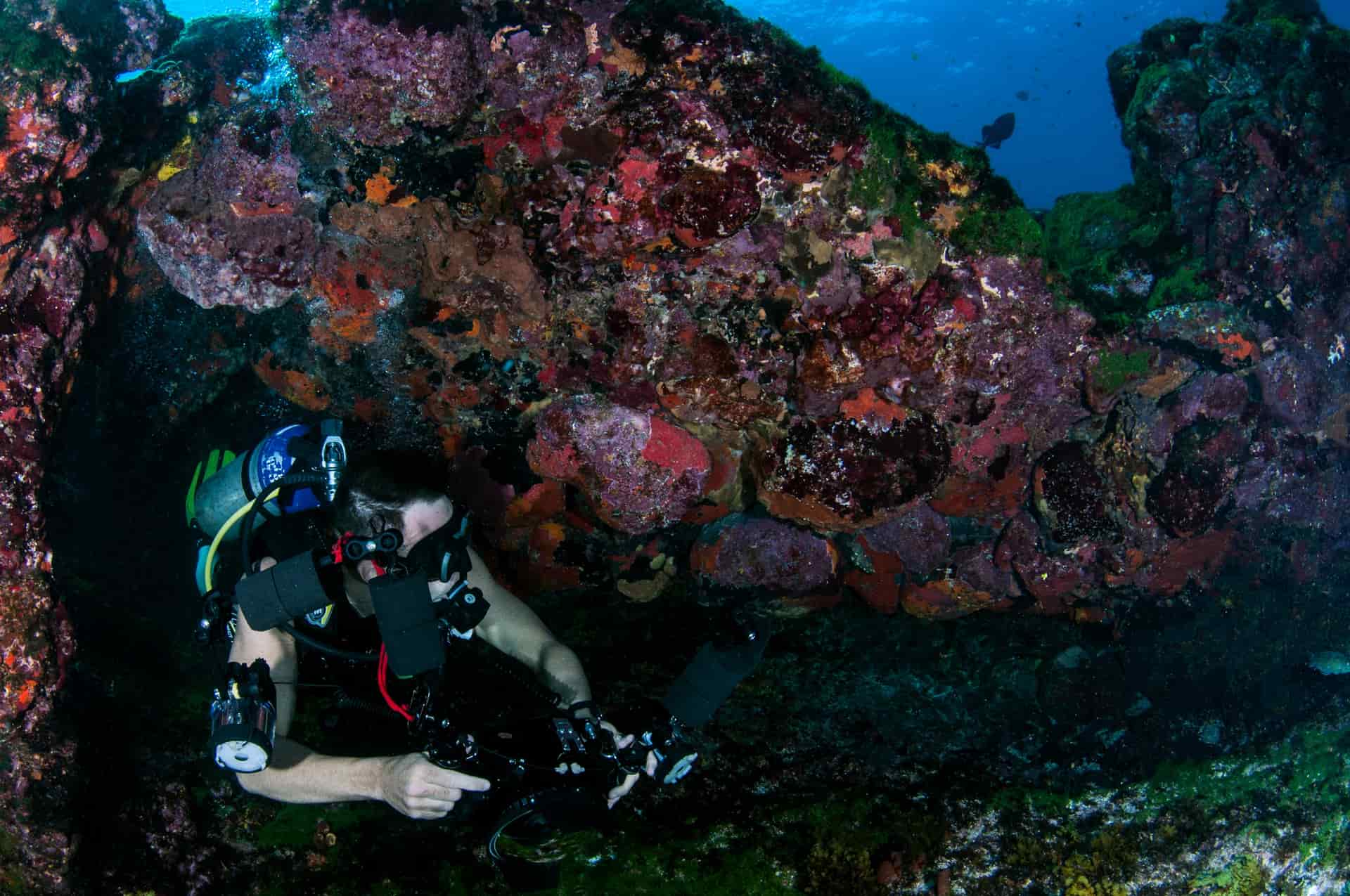 PolarPro DiveMaster Filter 3-Pack The only filter set here that publishes a depth range per filter, which is the whole reason a filter set is worth buying. | Snorkeling and diving where everything on camera comes back blue | 8.4/ 10 | |
| 03 | 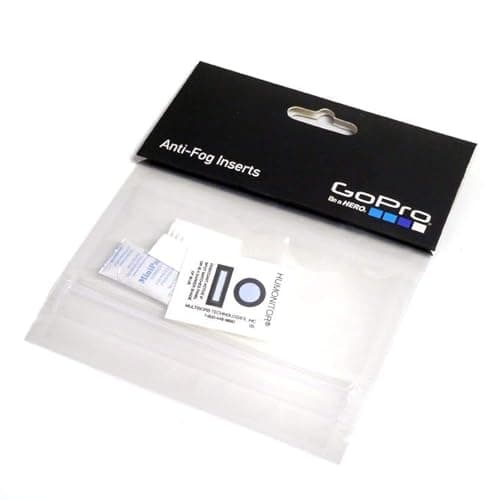 GoPro Anti-Fog Inserts (15-pack) Fifteen strips, reusable up to four times each, dried in an oven — the cheapest fix for the problem that ruins the most footage. | Anyone putting a camera in a housing in cold or humid air | 8.7/ 10 | |
| 04 | 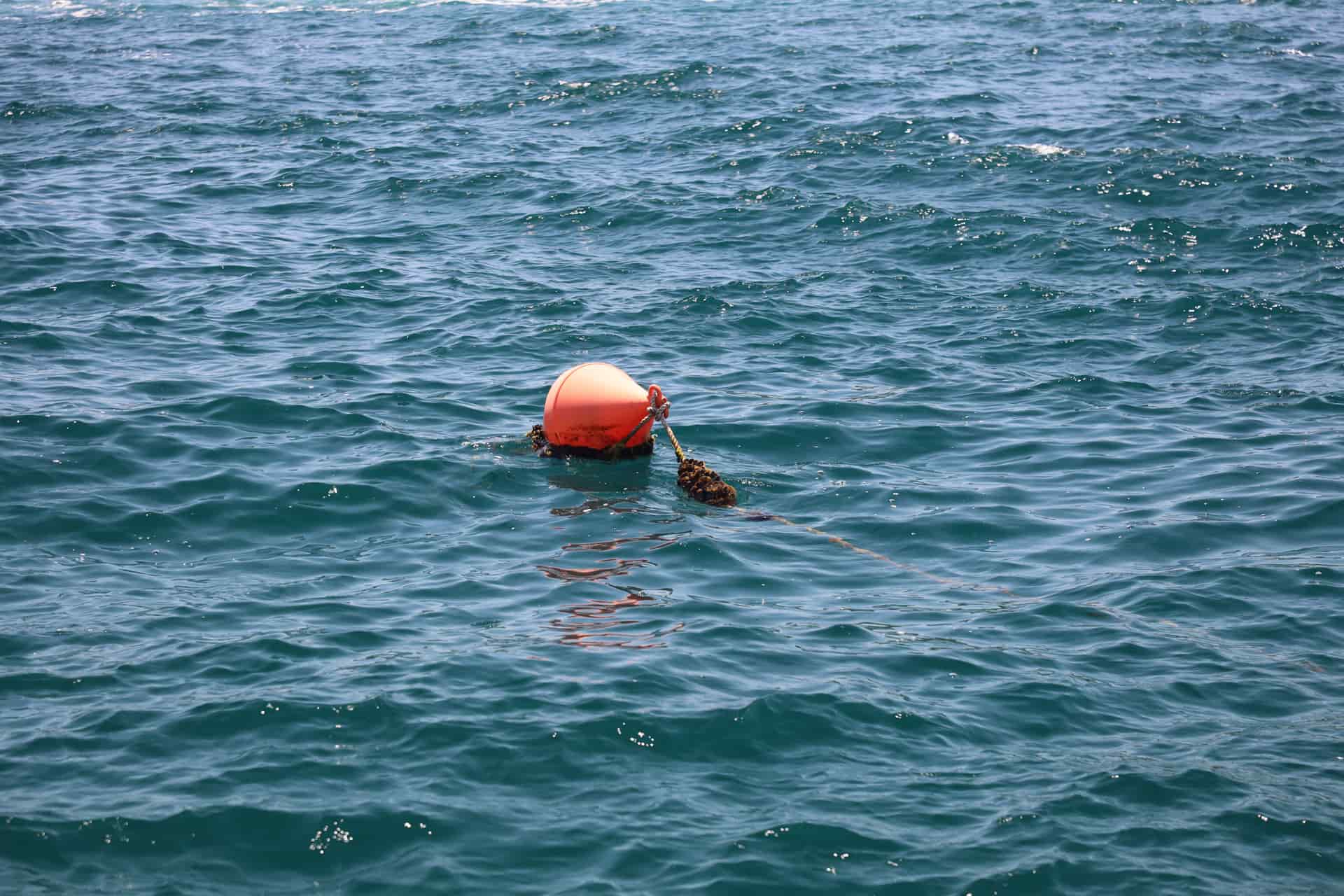 GoPro Floaty The one accessory that decides whether a dropped camera is a bad moment or a lost camera. Buy it with the camera, not after. | Every single person putting a camera near open water | 8.7/ 10 | |
| 05 | 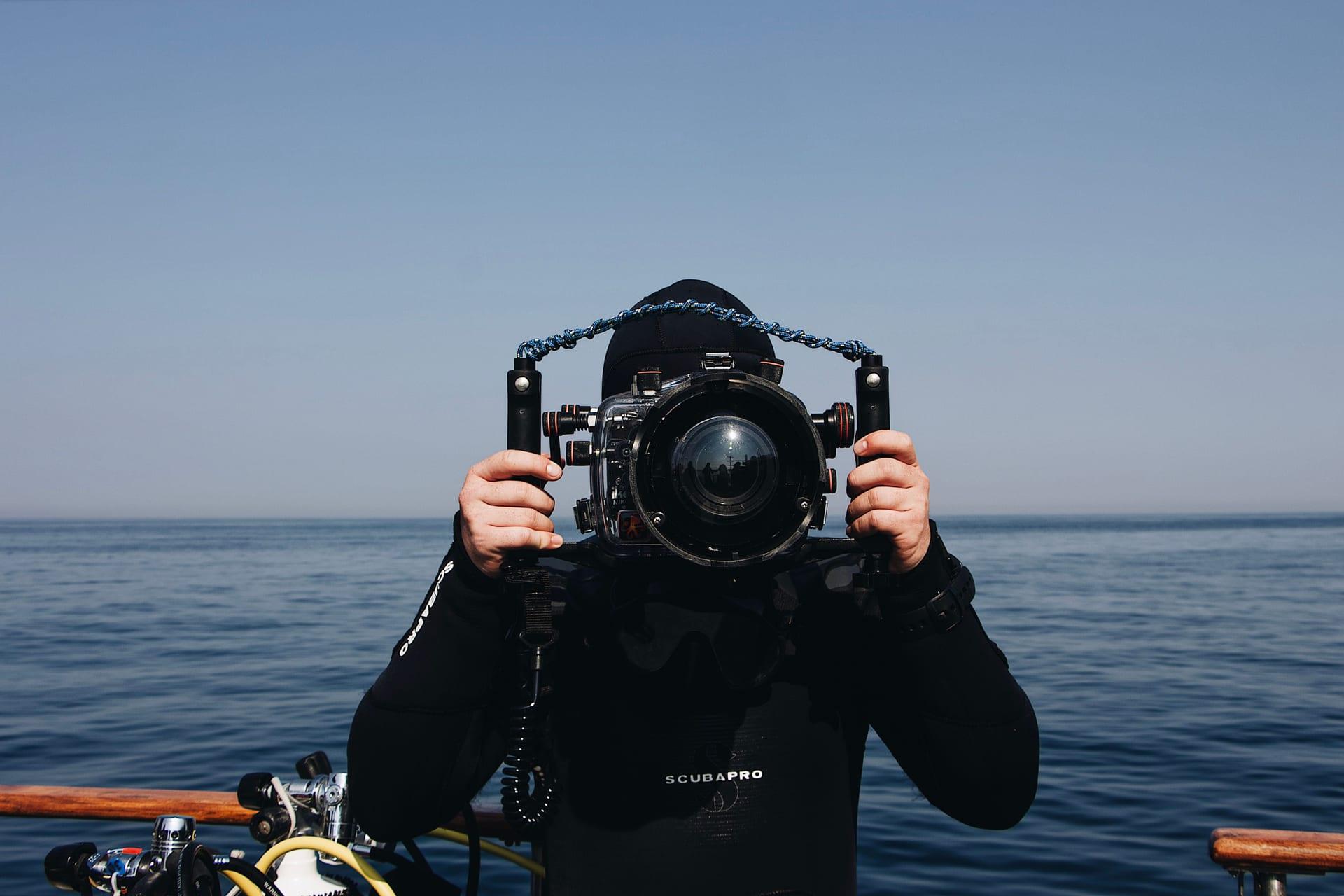 GoPro Protective Housing 196ft (60m) rated, with a flat glass lens — the piece that turns a 33ft camera into a diving camera. | Anything below about 30ft, and any camera going anywhere near a tank | 8.4/ 10 | |
| 06 | 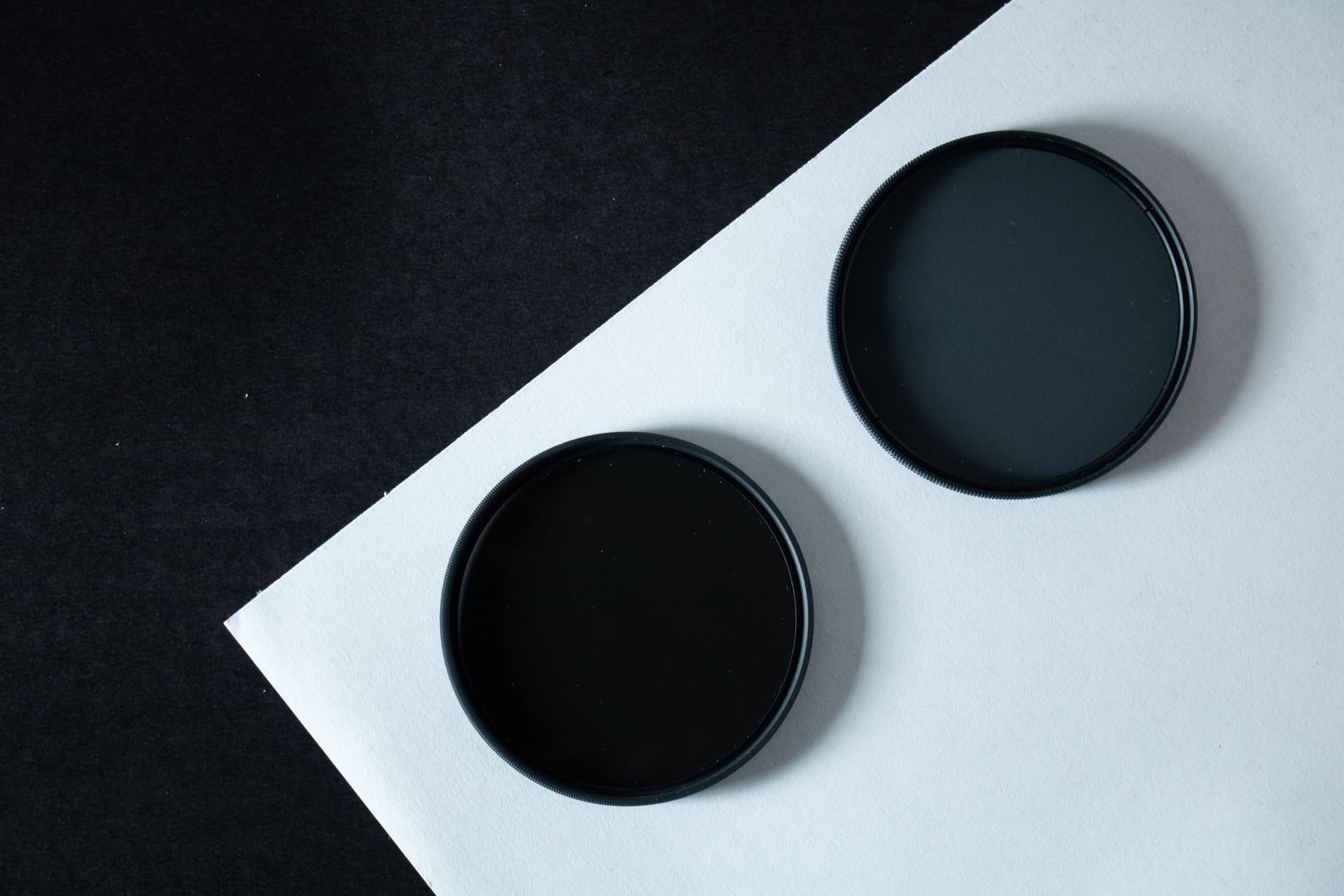 SANDMARC Aqua Filter Kit Red, magenta and yellow in one frame-swap system — the set to buy if you dive in more than one kind of water. | Divers who move between blue water, green water and night dives | 8.2/ 10 |
Scores are our editorial judgment from published specs and named independent reviews, weighted for lake and trail use — not measurements. We have not tested these units and do not own them.
02
How we picked
We do not lab-test, bench-test or dive-test cameras, and we do not own test units. What we do instead is read the manufacturer's published specifications, read the independent reviews that genuinely do test, read owner reports for the failure modes specs never mention — fogging, salt corrosion, cold battery collapse, mount slippage — and then weight all of it for floats and tethers used on lake and trail. Where a number is not published, the page says “not published” rather than filling the cell.
The full method, including what we refuse to do, is on the editorial policy page.
- 40%Buoyancy with the real rig
- Camera plus case plus mount — a float rated for the bare camera sinks.
- 30%Attachment security
- The float has to stay attached in the moment you need it.
- 18%Visibility
- Finding it in chop is the whole point of the color.
- 12%Bulk
- It has to not ruin the shot it is attached to.
What we ranked on
Snorkeling is not diving and it is not kayaking, and the kit list is different because the failures are different. You are at or just below the surface, holding the camera in a hand that is also swimming, in water that strips color out of the picture, with a sealed case that wants to fog. So this page ranks on what each item fixes, in the order the problems actually spoil footage.
Retention first. The cheapest lost-camera insurance beats every other upgrade, because a camera on the bottom of a lake has no image quality at all. That means something to grip, something that floats and ideally both - which is why the first and fourth picks are a floating grip and a float on the camera itself. They are not substitutes for each other.
Color second. Water absorbs red light with depth, so unfiltered footage past a few feet comes back blue or green no matter what camera you bought. A filter is the only fix that works optically, at the time, rather than being a grading job you will not do. The ranking inside the filter picks is by whether the maker publishes a depth range per filter, because a filter used at the wrong depth makes the footage worse.
Clarity third. Fogging ruins more snorkeling clips than any other single cause, and it is the cheapest thing on this page to prevent. No camera setting touches it.
Depth last, and only if you need it. A dive housing is the right purchase for a free-diver or an older camera and the wrong one for a surface snorkeler with a modern body. Published bare ratings decide this, not marketing - which is why the housing is fifth and says so.
The published figures, side by side
| Accessory | What it fixes | Published figure | Needs a housing? | Price |
|---|---|---|---|---|
| GoPro The Handler | Grip and retention in hand | Floats orange-end-up; quick-release base | No | Check price |
| PolarPro DiveMaster 3-Pack | Color loss with depth | Snorkel 5-15ft; red 15-75ft; magenta 10-75ft (green water) | Yes | Check price |
| GoPro Anti-Fog Inserts | Condensation inside the housing | 15 inserts, reusable up to 4x, dried at 300F for 5 min | Yes | Check price |
| GoPro Floaty | A dropped camera sinking | ADFLT-001; fits HERO13, 12, 11, 10, 9 Black | No | Check price |
| GoPro Protective Housing | Depth past the bare rating | 196ft (60m), flat glass front | It is the housing | Check price |
| SANDMARC Aqua Filter Kit | Color loss across different water | Red, magenta and yellow; fits HERO13-9 housings | Yes | Check price |
What you probably do not need
A dive housing, if your camera is modern. This is the most common overbuy in snorkeling. GoPro publishes 33ft (10m) bare for the HERO13 Black and the HERO12 Black; DJI publishes 20m for the Osmo Action 5 Pro and the Osmo Action 6; Insta360 publishes 39ft (12m) for the Ace Pro 2. Snorkeling happens in the top few feet. Unless you free-dive or your camera is an older shallow-rated body, the housing adds a fogging risk and takes your audio away in exchange for depth you will not reach. How deep an action camera can go lines up every bare rating.
A head strap, usually. It sounds right and it films your own snorkel tube and a lot of bobbing. Snorkeling footage is better handheld, because you can approach something slowly and hold the frame on it.
A big accessory bundle. The 40-piece kits are mostly adapters for mounts you will never use. The six items on this page are the ones that come back from a trip having earned their space - the first five accessories is the general-purpose version of the same argument, and the accessories under $100 is the version with a ceiling.
How the kit fits together on an actual swim
The order of operations matters more than the shopping list. Put the insert in before you leave the house, not at the beach with wet hands, and keep the pack in a sealed bag so the spares stay dry. Fit the filter at the surface and take it off when you come out, because a red filter above water makes every clip look like a sunset nobody asked for.
Put the float on the camera and the strap on your wrist, and treat them as two separate systems - the grip saves the rig when it slips out of your hand, the Floaty saves the camera when it comes out of the grip. Then rinse everything in fresh water the same day, especially if it was salt: salt water care and rinsing is five minutes that decides whether a filter frame still swaps next season.
Finally, shoot wider and closer than feels right. Water is not clear enough to shoot at a distance, so the thing you want in frame should be a couple of feet away, not across the reef. The settings side of that is in the snorkeling settings guide, and the snorkeling camera picks rank the bodies these accessories bolt onto. If the camera itself is still undecided and the shortlist is a GoPro, the HERO13 Black alternatives set out which bodies publish a deeper bare rating - the specification that decides whether you need the housing on this page at all.
03
Every pick, in detail
- Bright orange end pops to the surface
- Quick release, switches between mounts
- Non-slip construction
- 8.0
- 8.5
- 9.0
- 7.0
GoPro The Handler Floating Hand Grip
GoPro
A grip that floats bright-orange-end-up when you drop it, with a quick release so the camera moves to a mount without tools.
Handheld water shots — snorkeling, swimming, filming from the boat
Who it is for: everyone. Snorkeling is the one water activity where the camera is almost always in your hand rather than on a mount.
A bare action camera is a slippery rectangle, and holding one at arm's length while you breathe through a tube is how footage ends up pointing at your own fins. The Handler gives you something to grip with a wet, cold hand, and GoPro lists it specifically for surfing, kayaking and wakeboarding - the uses where letting go is a question of when rather than if. It floats end-up, so the bright orange tip is what you see in chop, and the quick-release base means the same camera comes off the grip and onto a chest mount in seconds.
Honest cons. It floats the grip: hang a dive housing plus a filter frame on the end and the buoyancy math changes, so test the complete rig in a pool before you trust it over deep water. Not every configuration ships with a wrist strap, and you want one - a floating grip you have let go of is still a swim. It is also bulky in a PFD pocket. Floats, tethers and not losing it is the full retention argument.
- Floats end-up so you can actually spot it in chop
- Quick-release base means the same camera goes from hand to deck mount in seconds
- Non-slip even with wet or cold hands
- GoPro lists it specifically for surfing, kayaking and wakeboarding
- It floats the grip; a heavy housing on the end changes that calculation
- No wrist strap included in every configuration — add one
- Bulky in a PFD pocket
Specs from GoPro The Handler product page.
- Tropical water, 15-75ft
- Tropical water, 5-15ft
- Green water, 10-75ft
- 9.0
- 8.0
- 8.5
- 7.0
- 8.0
PolarPro DiveMaster Filter 3-Pack
PolarPro
The only filter set here that publishes a depth range per filter, which is the whole reason a filter set is worth buying.
Snorkeling and diving where everything on camera comes back blue
Who it is for: anyone whose snorkeling clips come back a flat, lifeless blue - which is to say, anyone who has snorkeled with a camera.
Water absorbs red light first, and past a few feet a camera has no red left to record. No setting recovers what the water took. A filter puts the red back optically, before the sensor sees the scene, and the DiveMaster set is the one we rank first because PolarPro publishes a depth range for each filter instead of leaving you to guess: a snorkel filter for tropical water at 5-15ft, a red filter for tropical water at 15-75ft, and a magenta filter for green water at 10-75ft. That snorkel filter is aimed at exactly the band a snorkeler films in, and the magenta one matters on a lake or a quarry where the water is green rather than blue.
The cons are real and the first one is a cost. These mount to the GoPro Protective Housing - they do not clip to a bare camera - so a filter purchase is often a housing purchase too, which is why the housing is on this page at all. Three filters also means swapping at the surface, dropping one means losing one, and the wrong filter for the water overcorrects badly: red glass above the waterline makes everything look wrong and no grading fixes it. Filters and dome ports covers which filter belongs at which depth.
- Published depth ranges per filter, so you can pick correctly instead of guessing
- Includes a magenta filter for green water, which most sets skip
- Snorkel filter covers the 5-15ft band where most people actually film
- Fits the GoPro Protective Housing, which is where dive filters belong
- Requires the Protective Housing — these do not clip to a bare camera
- Three filters means swapping at the surface, and dropping one is losing one
- Tropical vs green water is a real distinction; the wrong filter overcorrects badly
Specs from PolarPro Dive Filters product page.
- 15 inserts
- Reusable up to four times
- 300°F for five minutes, then an airtight bag
- 8.5
- 8.0
- 9.5
- 9.0
GoPro Anti-Fog Inserts (15-pack)
GoPro
Fifteen strips, reusable up to four times each, dried in an oven — the cheapest fix for the problem that ruins the most footage.
Anyone putting a camera in a housing in cold or humid air
Who it is for: anyone putting the camera in a housing, which in warm humid air over cool water is most snorkelers.
This is the cheapest item on the page and it prevents the failure that wastes a whole session. Warm wet air sealed inside a case, then dropped into cooler water, condenses on the inside of the lens port - and you do not find out until you are home. The inserts sit inside the door and absorb that moisture. GoPro publishes the two numbers that make them worth buying rather than guessing at: 15 inserts per pack, each reusable up to four times, dried at 300°F for five minutes and then kept in an airtight bag. That is roughly 60 sessions out of one pack, and they work in both the waterproof and dive housings.
Cons, plainly. They are consumables: a saturated insert does nothing, and a damp one is a useless one, so the oven step is not optional. They also only help inside a housing - a bare camera that fogs is fogging for a different reason, usually a wet door seal or a soaked gasket. And the price moves around on this listing, so the button below goes to the current page rather than a number we would be quoting from last week. The anti-fog guide has the whole procedure, and stop fogging and overheating covers the habits that matter more than the product.
- GoPro publishes the reuse count and the exact drying procedure
- 15 inserts at four uses each is around 60 sessions from one pack
- Works with both the waterproof and dive housings
- Solves a problem no camera setting can touch
- They are consumables — once saturated they do nothing
- The oven step is easy to forget, and a damp insert is a useless insert
- Only help inside a housing; a bare camera fogs for different reasons
Specs from GoPro Anti-Fog Inserts product page.
- ADFLT-001
- HERO13, 12, 11, 10, 9 Black
- Keeps the camera at the surface
- 8.5
- 9.0
- 9.5
- 7.5
GoPro Floaty
GoPro
The one accessory that decides whether a dropped camera is a bad moment or a lost camera. Buy it with the camera, not after.
Every single person putting a camera near open water
Who it is for: anyone snorkeling over water deeper than their arm, and especially anyone handing the camera to a child.
Every action camera sinks, and so does most of the housing range. The Floaty attaches to the camera itself rather than to a mount you might swap off, which is the distinction that matters: a float on the grip does nothing when the camera leaves the grip. It is bright orange because finding it is the whole job. Next to the camera it saves, it is close to free.
Three honest cons. Model numbers decide whether it fits at all - the current ADFLT-001 fits HERO13, 12, 11, 10 and 9 Black, and the older AFLTY-004 does not - so check before you order. It adds bulk that changes how the camera seats in a tight mount. And it floats the camera, not the camera plus a heavy housing and filter frame, which is the same warning as the grip above: test the real rig, not the camera alone. It is also the reason the grip and the float are both on this page rather than one standing in for the other.
- Attaches directly to the camera rather than to a mount you might swap off
- Bright orange, which is the difference between finding it and not
- Cheap next to the camera it saves
- Works with the standard door, so nothing else changes about your setup
- Model numbers matter — the older AFLTY-004 does not fit HERO13, 12, 11, 10 or 9
- Adds bulk that changes how the camera sits in a tight mount
- It floats the camera, not the camera plus a heavy housing and mount — check the whole rig
Specs from GoPro Floaty (ADFLT-001) product page.
- 196ft (60m)
- HERO13, 12, 11, 10 Black
- Flat glass front
- 9.5
- 8.5
- 8.0
- 7.0
- 6.0
GoPro Protective Housing
GoPro
196ft (60m) rated, with a flat glass lens — the piece that turns a 33ft camera into a diving camera.
Anything below about 30ft, and any camera going anywhere near a tank
Who it is for: free-divers, anyone going past their camera's bare rating, and anyone who wants the filters above. For surface snorkeling with a modern camera, skip it.
We rank it fifth deliberately, and the reason is honesty rather than hedging. GoPro rates this housing to 196ft (60m) with a flat glass front, which is six times the HERO13 Black's bare 33ft (10m), and it is also the best impact protection the camera can wear. If you duck-dive to look at something on the bottom, or your camera is an older or cheaper body with a shallow rating, this is the part that makes the plan safe. It is also the mount the PolarPro and SANDMARC filter sets attach to, so a filter decision drags it along.
But the cons point straight back at snorkeling. The sealed door muffles audio badly - that is physics, not a defect - and a sealed pocket of warm air is exactly how fogging starts, which is why the inserts above exist. Buttons are harder to work with cold hands. If your camera already publishes 10m or more bare and you are filming at the surface, you are adding fog risk and losing audio for depth you will not use. Do you need a protective housing is the decision in full, and cases and dive housings ranks the options if the answer is yes.
- 60m is six times the HERO13 Black's bare rating
- Flat glass lens rather than plastic, so the image holds up
- Includes a skeleton backdoor for better audio when you are not underwater
- Also the best impact protection the camera can wear
- Muffles audio badly with the sealed door — that is physics, not a defect
- Sealed air plus a temperature change is exactly how fogging happens; budget for inserts
- Buttons are harder to work with gloves on
Specs from GoPro Protective Housing product page.
- Red, magenta and yellow
- HERO13, 12, 11, 10, 9 Protective Housing
- Swap frame
- 8.5
- 8.0
- 8.0
- 8.5
- 7.5
SANDMARC Aqua Filter Kit
SANDMARC
Red, magenta and yellow in one frame-swap system — the set to buy if you dive in more than one kind of water.
Divers who move between blue water, green water and night dives
Who it is for: snorkelers who swim in more than one kind of water, and anyone who wants a faster filter swap at the surface.
Red, magenta and yellow in one frame-swap system, fitting the Protective Housing across HERO13, 12, 11, 10 and 9 - so it survives a camera upgrade, which few accessories at this price do. The frame makes changing filters quicker than threaded sets, which matters when you are treading water, and the yellow filter is genuinely unusual in this band.
The con is the reason it sits below the PolarPro set rather than above it: SANDMARC does not publish per-filter depth ranges for the HERO13 set the way PolarPro does, so you are matching filter to water by eye rather than by a printed number. It needs the same Protective Housing, and there are small parts to lose in a wet, moving environment. Buy this one if you move between blue water, green water and the occasional night swim; buy the PolarPro if you want to be told which filter to use at 10ft.
- Three filters covering blue water, green water and night diving
- The frame system makes swapping filters faster than threaded sets
- Covers five GoPro generations, so it survives a camera upgrade
- Yellow filter for night diving is genuinely rare in this price band
- SANDMARC does not publish per-filter depth ranges for the HERO13 set the way PolarPro does
- Protective Housing required, same as the PolarPro set
- Small parts in a wet, moving environment
Specs from SANDMARC Aqua Filter Kit product page.
04
What decides this category
Check the model number, not the brand
Floats, housings and filter frames are generation-specific. The current GoPro Floaty is ADFLT-001 and fits HERO13 through HERO9 Black; the older AFLTY-004 does not. Filter frames are sold by housing generation. Buying the right part is a two-minute check and the most common accessory return in this category.
A filter is a depth decision, not a brand decision
If you film at 5-15ft in tropical water, you want the snorkel filter. If the water is green rather than blue, you want magenta. Sets that print their ranges let you get this right, which is why the PolarPro kit outranks the SANDMARC one here despite the SANDMARC frame being faster to swap.
Budget for the cheap consumable first
If you buy one thing on this page, make it the anti-fog inserts: it is the cheapest item here and it prevents the failure that ruins the most footage. Everything else improves good clips; inserts are what stop you coming home with none.
What we would skip
Dome ports for snorkeling - they are a split-shot tool and they are bulky to swim with. Red filters on a camera you also use above water without remembering to remove them. Any listing where the depth rating quoted belongs to a case rather than the camera. And cheap unbranded filter packs with no published depth guidance, which is a guess you pay for twice.
05
Questions people actually ask
01What accessories do I need for snorkeling with a GoPro?
Three, in this order: something to hold onto that floats, a red filter matched to the depth you film at, and anti-fog inserts. The GoPro The Handler covers the first, the PolarPro DiveMaster set covers the second with published depth ranges, and GoPro's own inserts cover the third for very little money. A GoPro Floaty on the camera itself is the fourth, and the one people wish they had bought.
02Do I need a dive housing to snorkel with a GoPro?
Usually not. GoPro publishes 33ft (10m) of bare waterproofing for the HERO13 Black and HERO12 Black, which is far deeper than snorkeling goes. You need the Protective Housing if you free-dive past that, if your camera has a shallower published rating, or if you want to fit dive filters - which mount to the housing rather than to the camera.
03Why does my snorkeling footage look blue, and does a red filter fix it?
Water absorbs red light first, so by a few feet down there is no red left for the sensor to record. A red filter restores it optically, before the camera sees the scene, which is why it works where editing does not. Match the filter to the depth and the water color - PolarPro publishes a snorkel filter for 5-15ft tropical water and a magenta filter for green water. The filter guide has the detail.
04How do I stop my GoPro housing fogging up when snorkeling?
Seal the housing in dry, cool air with an anti-fog insert in it, and do it before you reach the humid beach. GoPro publishes the reuse procedure for its inserts: up to four uses each, dried at 300°F for five minutes, then stored in an airtight bag. Stop fogging and overheating covers the habits that matter as much as the product.
05Will a floating grip stop me losing the camera?
It stops you losing the grip. The Handler floats bright-orange-end-up, but it floats itself plus a camera - add a dive housing and a filter frame and you should test the whole rig in a pool before you trust it. Put a Floaty on the camera as well, and a strap on your wrist: floats, tethers and not losing your camera explains why the two are separate systems.
06Are these accessories only for GoPro cameras?
The grip and the pole-style mounts work with anything on a two-prong fitting or a 1/4-20 thread, so they cross brands. The housing, the Floaty and both filter sets are GoPro-generation-specific - DJI and Insta360 sell their own cases and filter frames, and the bare ratings differ, which changes whether you need a case at all. Mount compatibility sets out what is genuinely universal.
06
Read this next
Best action camera for snorkeling
The bodies these accessories bolt onto, ranked on published bare depth.
Best settings for snorkeling
The free half of the fix - what to change before you get in.
Best GoPro accessories for kayaking
The same question for a boat, where reach and deck space change the answers.
Filters and dome ports for water
Which filter belongs at which depth, and when a dome is worth the bulk.
07
Sources
- GoPro The Handler product page
- GoPro Floaty (ADFLT-001) product page
- GoPro Anti-Fog Inserts product page
- GoPro Protective Housing product page
- PolarPro Dive Filters product page
- SANDMARC Aqua Filter Kit product page
Specifications are quoted from the manufacturer pages above as they read on the dates shown. Where a figure is not published, this site says so rather than estimating one. We have not tested these products.