The best action cameras for swimming
Depth is the easy part. The hard part is that both of your arms are swimming, so the camera has to work without a hand on it.
Part of On the Water.
We earn a commission if you buy through our links, at no extra cost to you. It never changes what we recommend or the order we rank it in — how this works.
01
Quick picks
| # | Product | Best for | Score | Price |
|---|---|---|---|---|
| 01 | 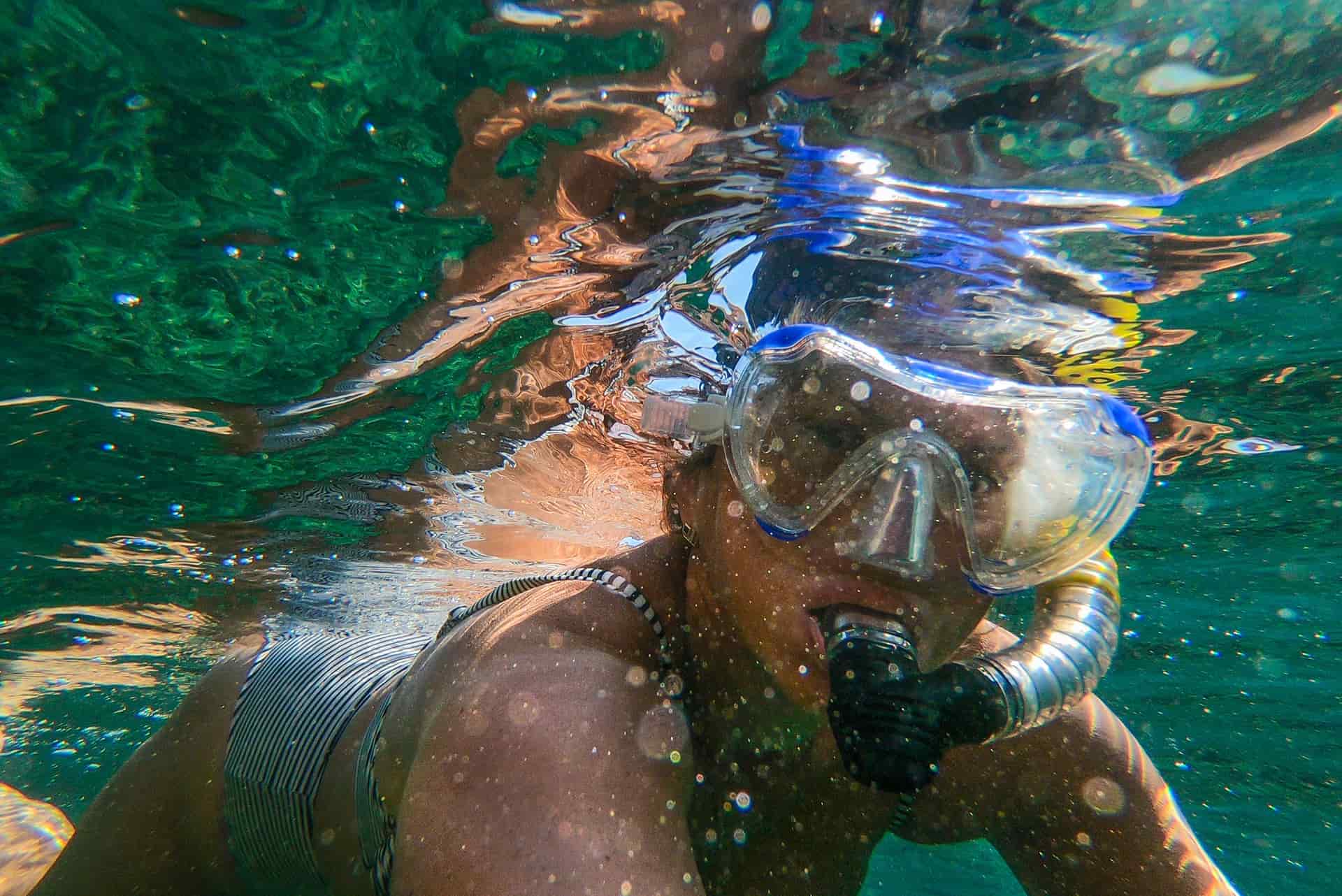 DJI Osmo Action 5 Pro Goes to 20m with no housing at all and publishes a 240-minute runtime — the two numbers that decide a long, wet, cold day. | Long paddles, cold water, and anyone tired of buying a housing to get past 10m | 9.1/ 10 | |
| 02 |  Insta360 GO Ultra 53 grams and IPX8 to 10m on its own — the camera you actually clip on for a paddle instead of leaving in the dry bag. | Hands-free clips where a full-size camera would never leave the bag | 7.6/ 10 | |
| 03 | 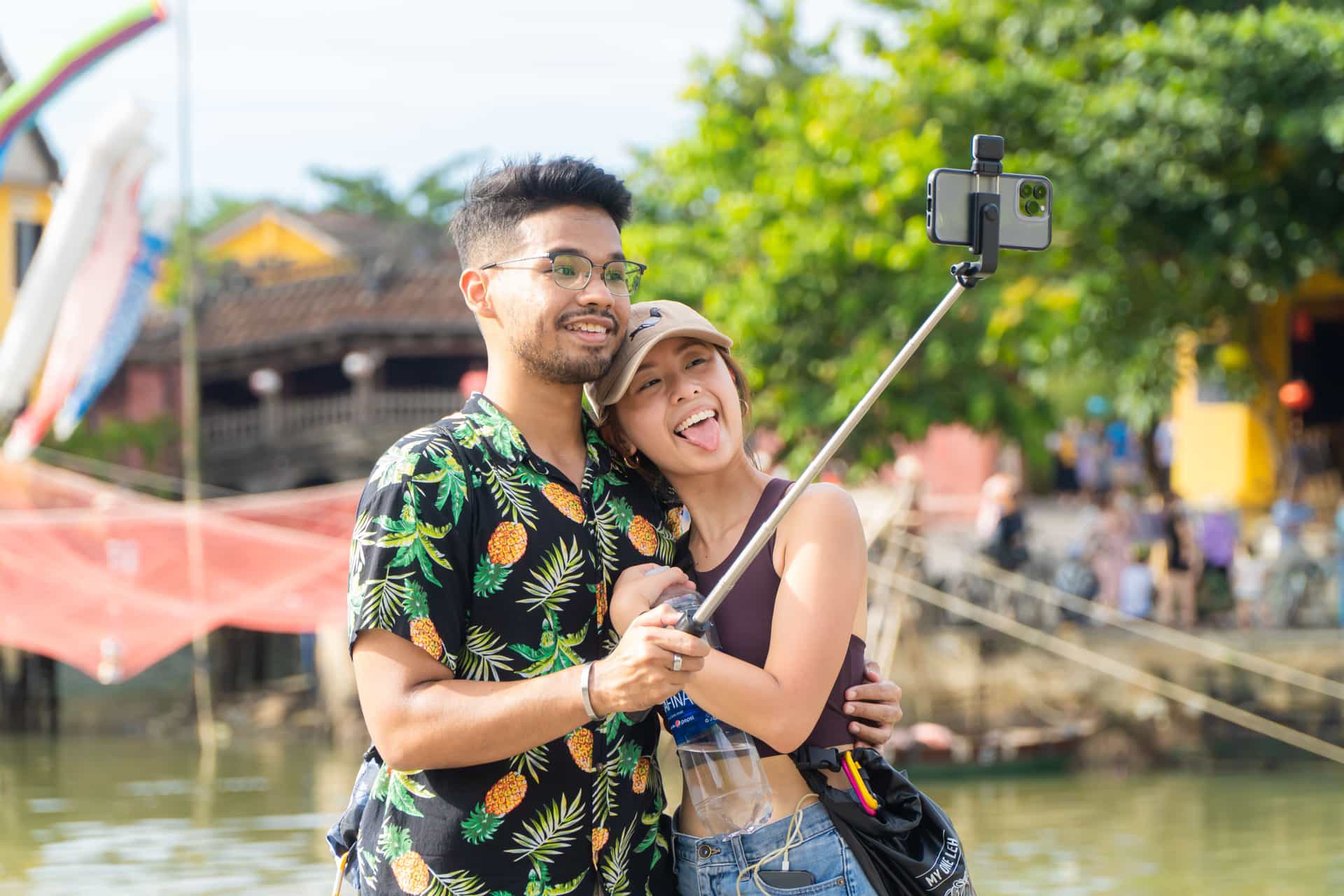 Insta360 X5 15m rated, replaceable lenses, and the one camera that means you never have to aim while you are paddling. | Anyone filming themselves on the water who cannot stop to frame a shot | 9.1/ 10 | |
| 04 |  GoPro HERO13 Black The safest default for lake and trail: 33ft without a housing, the steadiest footage in the category, and a mount for literally everything. | Anyone who wants one camera to handle the kayak, the bike and the family trip | 8.8/ 10 | |
| 05 | 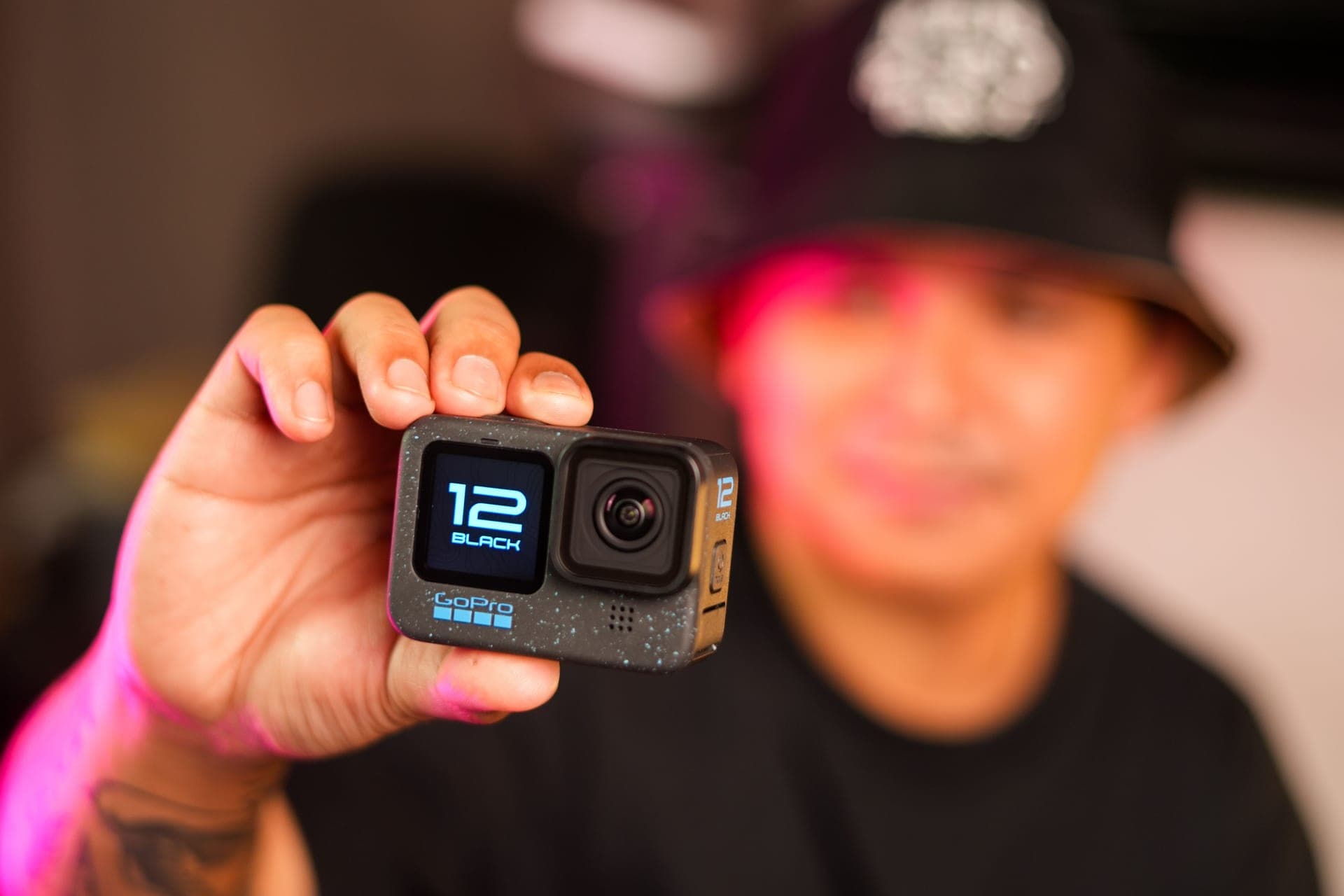 Insta360 Ace Pro 2 The best-looking image of the three flagships, with a flip screen that finally makes a chest-mounted shot something you can frame. | Family trips where you want the footage to look like more than dashcam clips | 8.6/ 10 | |
| 06 |  GoPro The Handler Floating Hand Grip A grip that floats bright-orange-end-up when you drop it, with a quick release so the camera moves to a mount without tools. | Handheld water shots — snorkeling, swimming, filming from the boat | 8.2/ 10 |
Scores are our editorial judgment from published specs and named independent reviews, weighted for lake and trail use — not measurements. We have not tested these units and do not own them.
02
How we picked
We do not lab-test, bench-test or dive-test cameras, and we do not own test units. What we do instead is read the manufacturer's published specifications, read the independent reviews that genuinely do test, read owner reports for the failure modes specs never mention — fogging, salt corrosion, cold battery collapse, mount slippage — and then weight all of it for action cameras used on lake and trail. Where a number is not published, the page says “not published” rather than filling the cell.
The full method, including what we refuse to do, is on the editorial policy page.
- 30%Water survival
- Rated depth without a case, door design, and what the manufacturer actually publishes.
- 25%Stabilization in chop
- A kayak deck and a rooty trail shake in ways a handheld walk test never shows.
- 20%Battery in the cold
- Published runtime, spare-battery cost, and whether it charges while recording.
- 15%Mount ecosystem
- Finger mount, threaded, magnetic — and how much of it you have to re-buy.
- 10%Footage you will keep
- Lens replaceability, low-light behavior, and how much cutting the footage needs.
Swimming is three different jobs
Every other page in this hub starts with what the boat does to the camera. Here there is no boat, so the question is what you are swimming for — and the three answers want genuinely different setups.
Pool laps and technique. You want the camera static and you want to swim past it: on the pool edge, propped at the end of the lane, or held under by a coach. Nothing is attached to you, image quality under artificial light matters, and the session is short. This is the easiest of the three and the one where the cheapest camera on the list is genuinely fine.
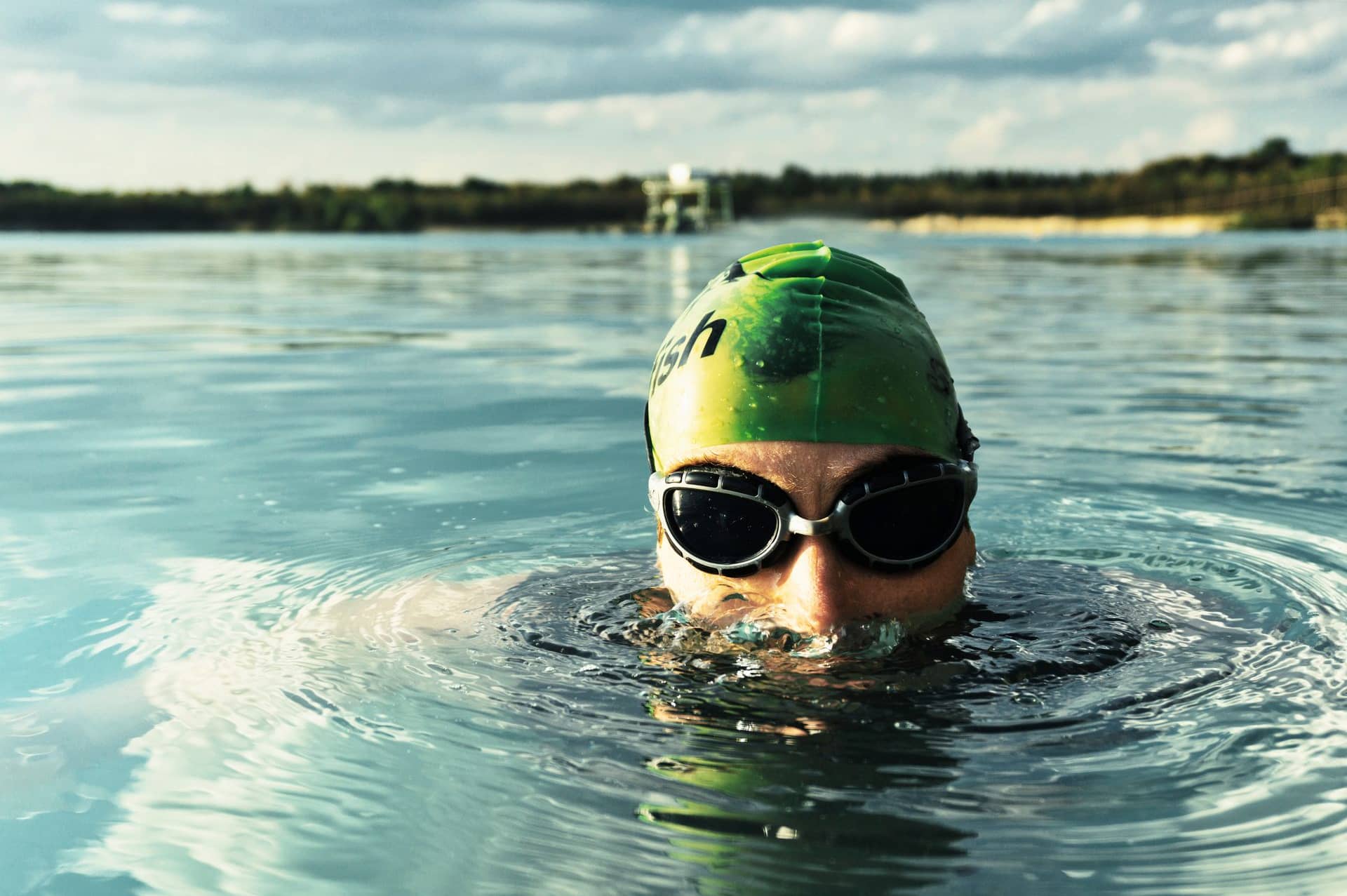
Open-water swimming. A lake, a reservoir, a sea swim, a triathlon leg. Now the camera has to come with you, nothing is static, the light is bright and flat, and you are far from the thing you left on shore. Weight, battery and a way to attach the camera to your head decide this entirely.
Play swimming. Kids in a pool, a holiday, jumping off a dock. Handheld most of the time, passed around, dropped regularly. Here a float is not a nice-to-have, it is the product, and ease of use beats every spec on the box.
The ranking above weights the second and third cases, because the first one barely needs a buying guide: set any waterproof camera on the edge and swim.
How we ranked these
Five criteria, ordered by how much they actually change the footage you come home with. The full scoring rubric sits above the picks; this is what the weighting means in the water.
| Criterion | What it measures here | Why it is weighted this way |
|---|---|---|
| How it attaches to a swimmer | Whether there is a workable head, goggle or grip option | Both arms are busy. This is the whole problem. |
| Weight in the water | Grams on your head, or drag in your hand | A heavy camera changes your head position and therefore your stroke |
| Bare depth rating | Whether it survives without a housing | Not for depth — for the fact that it is fully submerged for the whole session |
| Low light | Sensor performance under indoor pool lighting | Indoor pools are dimmer and flatter than any outdoor water on this site |
| Runtime | Published recording time | A lake swim plus the faff either side is longer than the session itself |
Where the camera goes when both arms are swimming
There are four workable positions and two that people try anyway. Worth knowing which is which before you buy a mount.
The goggle strap. The natural swimming mount: low profile, roughly eye-line, and no separate harness. It only works with a light camera — this is where the 53g GO Ultra genuinely beats cameras that are better in every other respect. Run the strap through something mechanical; a magnet is not enough once you push off a wall.
A head strap or swim cap. Slightly higher and more stable than goggles, and it takes a full-size camera. The honest trade is that a flagship on your forehead creates drag and pulls your head up, which is exactly the fault most swimmers are already working on. Fine for a relaxed open-water swim, not for a technique session.
A floating hand grip. The right answer for play, treading water and breaststroke, and the one that survives being handed to a child. It is useless for freestyle.
Static, in or beside the pool. The forgotten option and the best one for technique: put the camera on the pool edge or weight it on the bottom in the shallow end and swim past it. No mount to buy, no drag, and the footage is steadier than anything worn.
Pools: the things that are different indoors
You do not need a filter. Red filters exist to put back the color that open water strips out over distance, and a pool has neither the depth nor the distance for that to happen — the far wall is 25 meters away and the water is clear. A filter in a pool just makes everything warm and wrong. The filter guide covers where they do earn their money, which is open water and reef.
The blue cast is the tiles, not the water. Pool footage looks blue because the pool is painted blue and the light bounces off it. Setting white balance manually on deck, before you get in, fixes more of it than any color grade afterwards.
Indoor pools fog cameras. Warm, humid air plus a camera that has been sitting in a cold car equals condensation, sometimes inside the lens cover. Let the camera sit in the pool hall for ten minutes before you start, and if you use any kind of case, use anti-fog inserts — they cost very little and they are the only thing that reliably works.
Check the rules before you film. Plenty of public pools and leisure centers restrict or ban cameras outright, and the ones that allow them usually want you to ask first and to avoid filming other people's children. That is not legal advice, it is just how to avoid being asked to leave halfway through a session. Lane swim at a quiet hour, or ask the duty manager.
Open water: what actually goes wrong
You lose things in a lake. A camera that comes off your goggles in a pool is on the bottom of the pool, visible, in two meters of clear water. The same event in a lake is a lost camera. A float and a short tether is the cheapest insurance on this page, and the one most open-water swimmers skip.
The surface is a mirror. Swimming puts the lens at water level pointing into glare for most of the session, which is the single worst exposure condition we cover. Swim with the sun behind you where the course allows it, and expect every sighting shot into the sun to be a silhouette.
Cold eats battery, and then it eats the session. Published runtimes are measured warm. Open water in spring or autumn will take a meaningful bite out of the figures above, which is part of why the DJI bodies, rated to -20°C, rank where they do.
The camera is not a safety device. Worth saying plainly: do not swim further, longer or alone to get a shot, and do not stop in cold water to fix a mount. A tow float is a swimming purchase, not a camera purchase, and it comes first.
Chlorine, salt and the five minutes afterwards
Chlorinated water is not gentler on a camera than lake water — it is harder on seals and O-rings over a season, and the residue it leaves behind as it dries is the part that does the damage. The routine is the same one we publish for salt: rinse the camera in clean fresh water while the doors are still closed, dry it before you open anything, and do not let it dry out with residue sitting in the door seal.
It takes two minutes and it is the difference between a camera that lasts two seasons and one that lasts eight. The full version, including why you dry before you open, is in salt water care and rinsing — everything in it applies to a chlorinated pool.
03
Every pick, in detail
- 20m bare / 60m with case
- 1950mAh · 240 min at 1080p24
- -20° to 45°C
- 9.5
- 9.0
- 9.5
- 8.0
- 9.0
DJI Osmo Action 5 Pro
DJI
Goes to 20m with no housing at all and publishes a 240-minute runtime — the two numbers that decide a long, wet, cold day.
Long paddles, cold water, and anyone tired of buying a housing to get past 10m
It takes the top slot for the same reason it does everywhere else on this hub: 20m without the Waterproof Case, DJI's published 240 minutes at 1080p/24, and a -20°C operating range. For swimming specifically, the depth is overkill and the other two are not — a lake swim in May is cold, and a camera left running on the pool deck between sets eats battery in a way a kayak trip does not.
What it does not solve is the thing this page is actually about: it is a 146g brick with no way to attach to a swimmer other than a strap you buy separately. It is the best camera here. It is not the easiest one to swim with.
- 20m without the Waterproof Case — double the bare-camera depth of the HERO13 Black
- DJI publishes 240 minutes of recording at 1080p/24 with screens off, the longest figure in this set
- Rated to -20°C, which matters more on an October lake than any resolution number
- 1/1.3-inch sensor holds detail when the light goes flat
- Mount ecosystem is smaller than GoPro's, and magnetic quick-release adapters are their own purchase
- 146g — the heaviest of the flagship three
- Fewer third-party mounts and filters exist for it
Specs from DJI Osmo Action 5 Pro published specifications.
- IPX8 to 33ft (10m), camera only
- 53g
- Up to 170 min with the Action Pod
- 7.0
- 8.0
- 7.5
- 8.0
- 8.0
Insta360 GO Ultra
Insta360
53 grams and IPX8 to 10m on its own — the camera you actually clip on for a paddle instead of leaving in the dry bag.
Hands-free clips where a full-size camera would never leave the bag
This is the one that suits swimming as an activity rather than as a water-resistance test. 53 grams on a goggle strap or under a swim cap is light enough that it does not drag your head out of alignment, which a full-size camera genuinely does over a few hundred meters. IPX8 to 10m covers every pool and every lake swim.
Two honest catches. The Action Pod is not rated to the same depth as the camera, so read those two numbers separately and leave the pod on the deck. And the magnetic mounting that makes it so convenient is not a mechanical lock — in the water, through a strap or clipped, never magnet-only.
- 53g means it goes on a hat brim, a PFD strap or a chest magnet and you forget it is there
- IPX8 to 10m for the camera itself, with a 1/1.28" sensor that is far larger than the size suggests
- Action Pod adds a flip screen and the long runtime when you want it
- Removable microSD, so you are not stuck with fixed onboard storage
- The Action Pod is not rated to the same depth as the camera — read the two ratings separately
- Magnetic mounting is convenient but is not a mechanical lock in real chop
- No interchangeable lens cover, so a scratch is permanent
Specs from Insta360 GO Ultra published specifications.
- IP68 to 49ft (15m)
- 2400mAh · ~88 min at 8K30
- User-replaceable
- 9.5
- 9.5
- 9.0
- 8.5
- 7.5
Insta360 X5
Insta360
15m rated, replaceable lenses, and the one camera that means you never have to aim while you are paddling.
Anyone filming themselves on the water who cannot stop to frame a shot
A swimmer cannot aim, cannot check a frame and cannot stop mid-length to fix an angle. A 360 camera removes all three problems: it records the lane, the sky, the shoreline and your stroke at once, and you choose the shot afterwards at a desk. 15m IP68 is the deepest bare rating here and the lenses are user-replaceable, which matters when the camera meets a pool wall. The cost is real though — every clip needs a reframing pass, and it is a full-size body rather than something you wear, so this is a camera you swim toward rather than swim with, and on a pole it occupies a hand you need.
- 15m IP68 is the deepest bare rating of any camera on this site
- User-replaceable lenses — the single biggest fix for the 360 format's worst failure mode
- 185 minutes in Endurance mode at 5.7K24, which is a whole day of clips
- Invisible-selfie-stick reframing means you point the camera at nothing and pick the angle later
- Exposed lenses still scratch; lens guards are a purchase, not an option
- Every clip needs a reframing pass before anyone else can watch it
- 8K30 files are large and the edit is slower than flat footage
Specs from CineD, Insta360 X5 announcement with published specifications.
- 33ft (10m), no housing
- 1900mAh Enduro
- 1.5h at 5.3K30 / 2.5h at 1080p30
- 8.0
- 9.5
- 8.5
- 9.5
- 9.0
GoPro HERO13 Black
GoPro
The safest default for lake and trail: 33ft without a housing, the steadiest footage in the category, and a mount for literally everything.
Anyone who wants one camera to handle the kayak, the bike and the family trip
33ft is far more than any pool asks for, and the reason it sits here is the accessory shelf: head straps, clips, floating grips and floats for this body are available everywhere, which is not true of every camera above it. HyperSmooth is also quietly useful in a pool, where the shot is a long straight line and small wobbles read as seasickness. Against it: a full-size flagship on your head is a lot for a swim, its published runtime is the shortest of the three flagships, and anything past 33ft needs the separate housing you will never use for this.
- HyperSmooth 6.0 with AutoBoost is the steadiest stabilization we can find published figures for
- Built-in mounting fingers plus 1/4-20 threads — it fits the GoPro ecosystem and a normal tripod
- Enduro battery is rated to keep full camera functionality down to 14°F (-10°C)
- Replaceable lens cover, so a scratched lens is a $20 problem and not a $400 one
- 33ft is shallower than the DJI and it is the shallowest of the three flagships
- Anything past 33ft needs the separate Protective Housing
- HB-Series lenses and ND filters are all extra purchases
Specs from GoPro HERO13 Black published specifications.
- 39ft (12m) / 60m with dive case
- 1800mAh · 180 min published
- 1/1.3" with Leica lens
- 8.5
- 8.5
- 9.0
- 7.5
- 9.5
Insta360 Ace Pro 2
Insta360
The best-looking image of the three flagships, with a flip screen that finally makes a chest-mounted shot something you can frame.
Family trips where you want the footage to look like more than dashcam clips
The pick if the footage is for someone else to watch — a swim meet, a coaching clip, a holiday edit. The 1/1.3-inch sensor and 8K capture hold detail under the flat, dim artificial light of an indoor pool, which is a harder lighting problem than it looks. The flip screen means you can set it on the pool edge, aim it at the lane and actually see what it sees. 12m bare is plenty. It is the heaviest-feeling of the wearable options, and the dive case is an extra purchase you do not need for this.
- 8K30 with a 1/1.3-inch sensor — the most detail in the group
- 12m bare, which clears every snorkel depth without a housing
- 180-minute published battery life and 80% charge in 18 minutes
- Flip screen means you can frame a shot you are standing in front of
- 12m is still short of the DJI's 20m
- The dive case is a separate purchase for anything past 12m
- Fewer mount options than GoPro, and an adapter tax if you switch
Specs from Insta360 Ace Pro 2 published specifications.
- Bright orange end pops to the surface
- Quick release, switches between mounts
- Non-slip construction
- 8.0
- 8.5
- 9.0
- 7.0
GoPro The Handler Floating Hand Grip
GoPro
A grip that floats bright-orange-end-up when you drop it, with a quick release so the camera moves to a mount without tools.
Handheld water shots — snorkeling, swimming, filming from the boat
Included as a pick rather than a footnote, because for a lot of swimming the honest answer is that you hold the camera. The Handler floats bright-orange-end-up if you let go, GoPro lists it specifically for water sports, and the quick-release base means the same camera goes from your hand to a deck mount without tools. It only helps for breaststroke, treading water and play — you cannot freestyle holding anything — and a heavy housing on the end changes the buoyancy math, so test the rig you actually own.
- Floats end-up so you can actually spot it in chop
- Quick-release base means the same camera goes from hand to deck mount in seconds
- Non-slip even with wet or cold hands
- GoPro lists it specifically for surfing, kayaking and wakeboarding
- It floats the grip; a heavy housing on the end changes that calculation
- No wrist strap included in every configuration — add one
- Bulky in a PFD pocket
Specs from GoPro The Handler product page.
04
What decides this category
Buy on weight, then on everything else
This is the one category on the site where the lightest camera is the most serious recommendation rather than a compromise. Anything worn on a swimmer's head is a lever on your neck, and the difference between a 53g clip-on and a full-size flagship is the difference between forgetting it is there and noticing it every length. If the camera will be worn, start with weight and then see which of the light options has the specs you want.
Ignore the depth numbers
A competition pool is around 2m deep and a diving well about 5m. Lake swimming happens entirely at the surface. Every pick here is rated to at least 10m bare, which means depth is simply not a differentiator for this use — unlike the depth table, which matters a great deal if you snorkel or dive. Spend the attention on how the thing attaches instead.
Check the light where you actually swim
Indoor pools are dim and lit from above with a flat, color-shifted light that flatters nothing. If most of your swimming is indoors, sensor size is the spec that shows up in the footage, which pushes the 1/1.3-inch bodies up the list. If you swim outdoors in summer, almost anything looks fine and you can buy on weight and price alone.
A cheaper route, honestly
If the camera is only ever going to sit on the pool edge filming a lane, you do not need anything on this page. A budget body with a real waterproof rating does that job, and the budget roundup covers the ones worth owning. Buy up only when the camera has to come with you into open water, where battery, cold tolerance and losing it are real risks.
What we would skip
A dive housing — it adds fog risk and bulk to solve a depth problem you do not have. A red filter, for the reasons above. A dome port, which is for split-level shots and is an awkward thing to swim with. And any magnet-only mount in the water. Put that money into a float, a spare battery and a bigger card.
05
Questions people actually ask
01Will chlorine damage an action camera?
Over time, yes — chlorine is hard on seals and O-rings, and the residue left behind as the camera dries is what causes problems. A rinse in clean fresh water with the doors closed, then a dry before you open anything, is the whole routine. It is the same one we recommend after salt water.
02How deep does an action camera need to be rated for swimming?
10m is more than enough. A competition pool is around 2m, a diving well about 5m, and open-water swimming happens at the surface. Every pick on this page clears that without a housing, so depth should not be what you shop on.
03Can you mount an action camera on swim goggles?
Yes, and it is the best position for swimming — low, close to eye line and out of your stroke. It only works with a light camera, though: a full-size flagship on a goggle strap drags the strap down and pulls your head out of alignment. Use a mechanical attachment rather than a magnet.
04Do I need a red filter for pool footage?
No. Filters correct the color that open water strips out over distance and depth, and a clear 25m pool does neither. A filter in a pool overcorrects and leaves everything looking orange. Set white balance manually instead.
05Is a 360 camera better for swimming?
For capturing a swim, often yes — you cannot aim while swimming, and a 360 camera removes the need to. For wearing while swimming, no: the ones worth owning are heavier and are usually used on a pole, which occupies a hand. A light wearable camera is the better answer for freestyle.
06Will a camera slow me down?
A light camera on goggles, barely. A full-size camera on a head strap, noticeably — it adds drag and lifts your head, which is the opposite of what most swimmers are trying to do. If you are filming a technique session, put the camera on the pool edge instead of on yourself.
06
Read this next
Best action cameras for snorkeling
Once you are looking down rather than swimming along, color becomes the problem.
Floats, tethers and not losing your camera
The open-water swimmer's cheapest insurance, and the part numbers that have to match.
Salt water care and rinsing
The post-swim routine. Everything in it applies to a chlorinated pool.
How deep can an action camera go?
Every published depth rating, for when you do need the number.
Best action cameras for paddle boarding
The other standing-up-and-falling-in page, if you swim off a board.
07
Sources
- GoPro HERO (2024) published specifications
- GoPro The Handler product page
- DJI Osmo Action 5 Pro published specifications
- Insta360 GO Ultra published specifications
- CineD, Insta360 X5 announcement with published specifications
- GoPro HERO13 Black published specifications
- Insta360 Ace Pro 2 published specifications
Specifications are quoted from the manufacturer pages above as they read on the dates shown. Where a figure is not published, this site says so rather than estimating one. We have not tested these products.