The best action camera for rafting
On a raft you are a passenger on somebody else's boat. Nothing gets bolted to the tubes, everything gets wet, and the camera has to be attached to you.
Part of On the Water.
We earn a commission if you buy through our links, at no extra cost to you. It never changes what we recommend or the order we rank it in — how this works.
The DJI Osmo Action 5 Pro is the best action camera for rafting, because a rafting day is continuous immersion and a long shuttle either side of it: DJI publishes 20m of bare waterproofing with no housing - the deepest flat rating in our registry - and 240 minutes at 1080p/24 from a removable 1950mAh cell. It is for anyone on a commercial or club trip who wants to press record once and stop thinking about it. The DJI Osmo Action 4 is the budget pick, still 18m bare, at the lowest live price here - and on a river where cameras are genuinely lost, the cheaper body is a rational choice. The two accessories matter as much as the camera: the GoPro Chesty is how a camera attaches to you rather than to a boat you do not own, and the GoPro Handler floats, which on moving water is the difference between a dunk and a loss. Every price comes from the live price layer with the date it was read.
01
Quick picks
| # | Product | Best for | Score | Price |
|---|---|---|---|---|
| 01 | 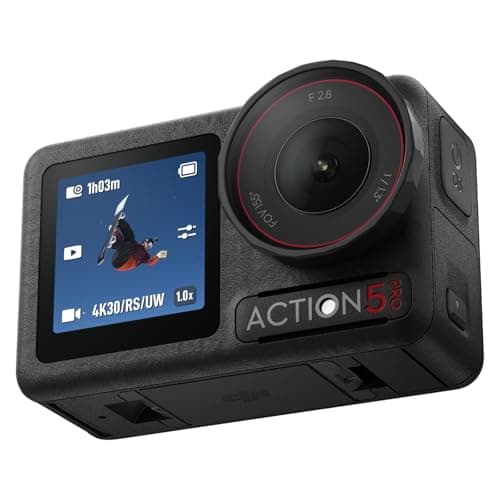 DJI Osmo Action 5 Pro Goes to 20m with no housing at all and publishes a 240-minute runtime — the two numbers that decide a long, wet, cold day. | Long paddles, cold water, and anyone tired of buying a housing to get past 10m | 9.1/ 10 | |
| 02 | 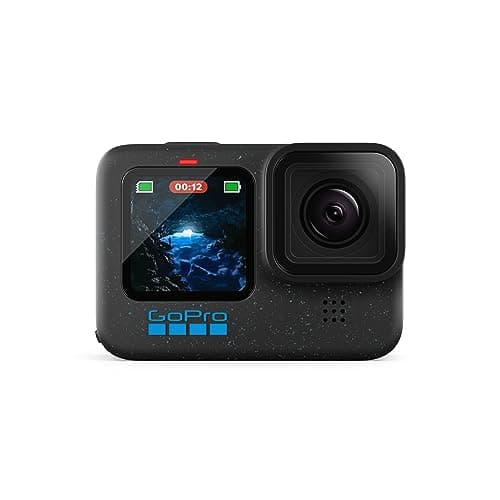 GoPro HERO12 Black The previous flagship, and the water story is identical to the HERO13 Black: 33ft bare, HyperSmooth 6.0, a removable Enduro battery. | Anyone who wants the flagship water rating without paying flagship money | 8.5/ 10 | |
| 03 | 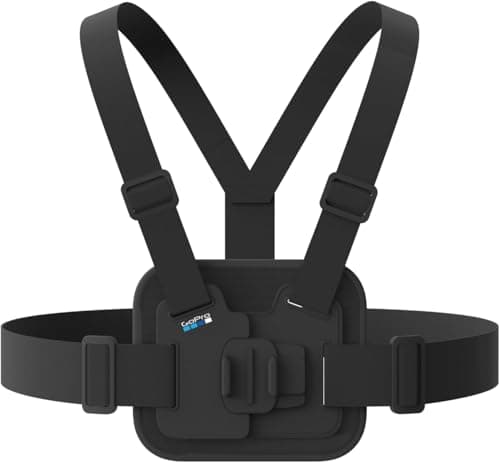 GoPro Chesty Performance Chest Mount The mount that shows your hands — which on a kayak means the paddle, and on a bike means the trail arriving. | Paddling and riding footage where the hands are the story | 8.1/ 10 | |
| 04 | 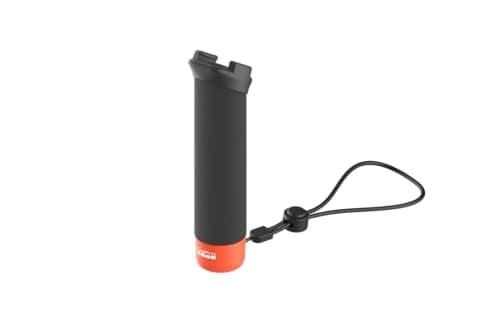 GoPro The Handler Floating Hand Grip A grip that floats bright-orange-end-up when you drop it, with a quick release so the camera moves to a mount without tools. | Handheld water shots — snorkeling, swimming, filming from the boat | 8.2/ 10 | |
| 05 | 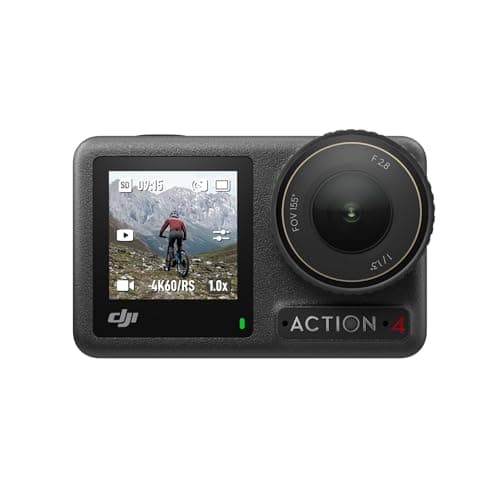 DJI Osmo Action 4 The previous DJI flagship, still 18m bare and still on shelves — the most water rating per dollar in this list. | Buyers who want deep-water capability without paying flagship money | 8.5/ 10 |
Scores are our editorial judgment from published specs and named independent reviews, weighted for lake and trail use — not measurements. We have not tested these units and do not own them.
02
How we picked
We do not lab-test, bench-test or dive-test cameras, and we do not own test units. What we do instead is read the manufacturer's published specifications, read the independent reviews that genuinely do test, read owner reports for the failure modes specs never mention — fogging, salt corrosion, cold battery collapse, mount slippage — and then weight all of it for action cameras used on lake and trail. Where a number is not published, the page says “not published” rather than filling the cell.
The full method, including what we refuse to do, is on the editorial policy page.
- 30%Water survival
- Rated depth without a case, door design, and what the manufacturer actually publishes.
- 25%Stabilization in chop
- A kayak deck and a rooty trail shake in ways a handheld walk test never shows.
- 20%Battery in the cold
- Published runtime, spare-battery cost, and whether it charges while recording.
- 15%Mount ecosystem
- Finger mount, threaded, magnetic — and how much of it you have to re-buy.
- 10%Footage you will keep
- Lens replaceability, low-light behavior, and how much cutting the footage needs.
Why rafting is its own problem
Every other water page on this site assumes you own the boat. Rafting usually means you do not: it is a commercial trip, a club boat or a friend's raft, and that one fact removes most of the mounting catalog. Three criteria follow from it.
It mounts to you, not the boat. No drilling, no adhesive, no suction on inflatable PVC. That leaves a chest harness, a helmet mount and a handheld grip, which is why two of the five picks here are mounts.
Retention is the main specification. Moving water loses cameras in a way flat water does not: a dropped camera is instantly downstream and under aerated water, where even a floating one can be hard to see. Float plus leash, both, always.
Water contact is total and continuous. Not a dive - a soaking, repeatedly, for hours, plus a swim or two. The bare rating is margin for the moment you are the one in the river.
The published figures, side by side
| Pick | Bare water rating | Published runtime | Attaches to | Price |
|---|---|---|---|---|
| DJI Osmo Action 5 Pro | 20m bare / 60m with case | 240 min at 1080p/24 | DJI quick-release, adapter for two-prong | Check price |
| GoPro HERO12 Black | 33ft (10m) bare / 196ft (60m) housed | Over 2.5h at 1080p30 | Built-in two-prong fingers + 1/4-20 | Check price |
| GoPro Chesty | n/a | n/a | You - fits over heavy layers and a PFD | Check price |
| GoPro The Handler | Floats - bright orange end | n/a | Handheld, quick-release base | Check price |
| DJI Osmo Action 4 | 18m bare / 60m with case | 160 min at 1080p/24 | DJI quick-release, adapter for two-prong | Check price |
Three settings to fix before you get on the water
Drop the resolution. 1080p or 4K at a normal frame rate, not the highest mode. You get a longer runtime, a smaller file and footage that is actually usable on a phone that evening.
Turn stabilization and horizon leveling on. A raft rotates constantly; horizon leveling is what stops the footage looking like a washing machine. The stabilization comparison covers the modes.
Deal with the water on the lens. A hydrophobic treatment or simply licking and flicking the lens before each rapid does more for river footage than any setting. Best settings for water has the rest.
Who should buy which
One camera for a season of trips: the Osmo Action 5 Pro.
Borrowing mounts from the outfitter: the HERO12 Black.
Whatever camera you take: the Chesty and the Handler, plus a leash.
One trip, and you would rather not lose a flagship: the Osmo Action 4. The whitewater kayaking picks cover the same river from your own boat.
03
Every pick, in detail
- 20m bare / 60m with case
- 1950mAh · 240 min at 1080p24
- -20° to 45°C
- 9.5
- 9.0
- 9.5
- 8.0
- 9.0
DJI Osmo Action 5 Pro
DJI
Goes to 20m with no housing at all and publishes a 240-minute runtime — the two numbers that decide a long, wet, cold day.
Long paddles, cold water, and anyone tired of buying a housing to get past 10m
Who it is for: the rafter who wants one camera, no housing and no battery anxiety.
20m bare is the deepest flat-camera rating we track, and on a river that is not about depth - it is about the fact that a swimmer gets held under, dragged through a hole and bounced off rock with the camera attached. A rating with that much margin means the water is not the thing that ends your day. The 240 published minutes at 1080p/24 covers a full trip including the bus, and the removable 1950mAh cell means a spare in a dry bag is the whole contingency plan. DJI also publishes a -20° to 45°C battery operating range for cold snowmelt runs.
Honest cons: DJI's mount catalog needs an adapter for two-prong fittings, which matters because almost every helmet and chest mount sold is GoPro-standard - budget for the adapter. No flip screen. And it is the previous DJI generation. The Action 5 Pro read has the full sheet, and the whitewater kayaking picks cover the version of this where the boat is yours.
- 20m without the Waterproof Case — double the bare-camera depth of the HERO13 Black
- DJI publishes 240 minutes of recording at 1080p/24 with screens off, the longest figure in this set
- Rated to -20°C, which matters more on an October lake than any resolution number
- 1/1.3-inch sensor holds detail when the light goes flat
- Mount ecosystem is smaller than GoPro's, and magnetic quick-release adapters are their own purchase
- 146g — the heaviest of the flagship three
- Fewer third-party mounts and filters exist for it
Specs from DJI Osmo Action 5 Pro published specifications.
- 33ft (10m) bare / 196ft (60m) housed
- 1720mAh Enduro, removable
- Over 1.5h at 5.3K30 / over 2.5h at 1080p30
- 8.0
- 9.0
- 8.0
- 9.5
- 8.0
GoPro HERO12 Black
GoPro
The previous flagship, and the water story is identical to the HERO13 Black: 33ft bare, HyperSmooth 6.0, a removable Enduro battery.
Anyone who wants the flagship water rating without paying flagship money
Who it is for: the rafter borrowing or renting mounts, where the two-prong standard is what the outfitter will have.
Built-in folding fingers mean it fits every helmet mount, chest harness and floating grip on the river with no adapter - including whatever the guide produces from a dry box. GoPro publishes 33ft (10m) bare, 196ft (60m) housed, HyperSmooth 6.0 and a removable 1720mAh Enduro cell with over 2.5 hours at 1080p30. HyperSmooth matters here more than on flat water: a raft in a rapid is the most violent input a stabilization system gets.
Cons: 10m bare is a third of the top pick's margin; GoPro does not list GPS in the HERO12 Black specifications; and it is a superseded model. The stabilization roundup explains why that system is the real argument for it.
- 33ft (10m) without a housing — the same bare rating GoPro publishes for the HERO13 Black
- HyperSmooth 6.0, the same stabilization version as the current flagship
- Removable 1720mAh Enduro battery, so a spare is a pocket item rather than a power bank
- Built-in folding fingers plus a 1/4-20 thread: the whole GoPro mount catalog and a normal tripod
- GoPro does not list GPS in the HERO12 Black specifications
- No HB-Series lens mount, so none of the HERO13's swappable-lens accessories fit
- 1720mAh against the HERO13 Black's 1900mAh Enduro cell
- It is a superseded model, so stock narrows as it sells through — check the listing before you plan around it
Specs from GoPro HERO12 Black published specifications.
- Adjustable, fits over heavy winter jackets
- Quick-release buckle, usable with gloves
- Harness, vertical buckle, thumb screw
- 8.0
- 9.0
- 7.0
- 8.5
- 8.0
GoPro Chesty Performance Chest Mount
GoPro
The mount that shows your hands — which on a kayak means the paddle, and on a bike means the trail arriving.
Paddling and riding footage where the hands are the story
Who it is for: everyone on a raft. This is the mount, because the boat is not yours.
You cannot drill a rental raft, suction will not hold on PVC tube fabric, and adhesive pads are not going on somebody else's boat. That leaves your body, and the chest is the best part of it: it frames the paddle, the bow wave and the person opposite you going in. GoPro publishes the harness as adjustable over heavy winter jackets with a quick-release buckle usable with gloves - which over a PFD and a splash top is exactly the fit problem you have.
Cons: it sits over a PFD, so set the straps with the PFD on, not before; and it films where your torso points. Some outfitters have rules about what you may wear on your chest - ask before the safety briefing, not during. The chest mount roundup covers the category.
- Padded and breathable, and genuinely adjustable across body types and layers
- The quick-release buckle works with gloves on, which matters in cold water
- Lower and steadier than a helmet mount — less head-turn, less nausea in the edit
- Shows the paddle stroke, which is the shot most people are actually trying to get
- A PFD over the top changes the angle, so set it up wearing what you will actually wear
- Sits low; on a sit-inside kayak it can end up framing mostly deck
- Nothing about it is waterproof — it gets wet and stays wet
Specs from GoPro Chesty product page.
- Bright orange end pops to the surface
- Quick release, switches between mounts
- Non-slip construction
- 8.0
- 8.5
- 9.0
- 7.0
GoPro The Handler Floating Hand Grip
GoPro
A grip that floats bright-orange-end-up when you drop it, with a quick release so the camera moves to a mount without tools.
Handheld water shots — snorkeling, swimming, filming from the boat
Who it is for: the handheld shots, and the single best insurance policy on this page.
It floats. GoPro publishes a bright orange end that pops to the surface, non-slip construction and a quick-release base that switches between mounts. On a river, a dropped camera without a float is gone - it sinks in aerated water and the raft is already fifty meters downstream. With one, it bobs and gets picked up.
Cons: a floating grip in a rapid still travels downstream fast, so a leash to your PFD is the other half of the system; and holding a grip costs you a hand you may need on a paddle. Floats, tethers and not losing your camera is the page to read before a river trip.
- Floats end-up so you can actually spot it in chop
- Quick-release base means the same camera goes from hand to deck mount in seconds
- Non-slip even with wet or cold hands
- GoPro lists it specifically for surfing, kayaking and wakeboarding
- It floats the grip; a heavy housing on the end changes that calculation
- No wrist strap included in every configuration — add one
- Bulky in a PFD pocket
Specs from GoPro The Handler product page.
- 18m bare / 60m with case
- 1770mAh · 160 min at 1080p24
- -20° to 45°C
- 9.0
- 8.5
- 8.5
- 8.0
- 8.0
DJI Osmo Action 4
DJI
The previous DJI flagship, still 18m bare and still on shelves — the most water rating per dollar in this list.
Buyers who want deep-water capability without paying flagship money
Who it is for: the budget pick, and an honest answer to a river's loss rate.
18m bare, deeper than any current GoPro flagship, on the same 1/1.3-inch sensor size as the Action 5 Pro, with a removable 1770mAh cell, 160 minutes at 1080p/24 and the same -20° to 45°C battery operating range. Rivers eat cameras; taking a cheaper one with a real water rating is not a compromise, it is a strategy.
Cons: 160 published minutes against 240, no front screen, and DJI's Osmo Action 4 page states guaranteed software updates until 31 December 2026. The Action 4 read has the detail.
- 18m without a case still beats every current GoPro by a wide margin
- Same 1/1.3-inch sensor size as the Action 5 Pro
- Rated to -20°C like its replacement
- Usually the cheapest way into serious bare-camera depth
- 160 minutes published against the Action 5 Pro's 240
- Superseded, so accessories and support will taper off first
- No front OLED — the Action 5 Pro's front screen is genuinely more useful for framing
Specs from DJI Osmo Action 4 published specifications.
04
What decides this category
Float and leash are one purchase, not two options
A float makes the camera visible; a leash keeps it with you. In current you want both, because a floating camera in a rapid is a camera leaving at the speed of the river.
Mount it to your chest, not your head
Helmet mounts catch on throw lines, overhanging branches and rescue hands, and a camera on a helmet is one more thing in a swim. The chest is lower, steadier and out of the way - chest against helmet has the trade-off.
Record in long takes, not clips
Nobody can press record in a rapid. Start it in the pool above, let it run through, stop it in the eddy - and accept that most of the file is not the good part.
What we would skip
Suction mounts on an inflatable; adhesive pads on a boat you do not own; and taking a camera with no float on moving water at all.
05
Questions people actually ask
01What is the best action camera for rafting?
The DJI Osmo Action 5 Pro, on a published 20m bare water rating and 240 minutes of runtime at 1080p/24 - enough margin for a swim and enough battery for a full trip. The Osmo Action 4 is the cheaper pick and keeps 18m bare, which on a river is a sensible hedge against losing one.
02How do you mount a camera on a raft?
Usually you do not - a rental raft cannot be drilled and suction will not hold on PVC tube fabric. The camera goes on you, via a chest harness or a floating hand grip. Ask the outfitter what they allow before the trip.
03Will I lose my camera rafting?
You might, and that is the honest reason a float and a leash are on this page alongside the cameras. Moving water takes a dropped camera out of reach immediately, and aerated water hides it. Floats and tethers is the page to act on.
04Do I need a waterproof housing for rafting?
No - every camera on this page publishes a bare water rating of at least 10m, which is far beyond what a swim in a rapid requires. A housing adds bulk, muffles audio and brings fogging risk.
05What settings should I use for whitewater?
A moderate resolution at a normal frame rate, stabilization and horizon leveling on, and long takes rather than clips. Best settings for water covers exposure and the lens beading problem as well.
06
Read this next
Best action camera for whitewater kayaking
The same river from a boat you own and can mount to.
Floats, tethers and not losing your camera
Retention, which on moving water is the main specification.
Best chest mounts
The mount that works when the boat is not yours.
Best settings for water
Exposure, stabilization and the beading-lens problem.
07
Sources
- DJI Osmo Action 5 Pro published specifications
- GoPro HERO12 Black published specifications
- GoPro Chesty product page
- GoPro The Handler product page
- DJI Osmo Action 4 published specifications
Specifications are quoted from the manufacturer pages above as they read on the dates shown. Where a figure is not published, this site says so rather than estimating one. We have not tested these products.