Insta360 X5 vs Insta360 Ace Pro 2
Two cameras from the same company that solve different problems. One records everything and makes you choose later; the other has the better single image.
Part of Cameras.
We earn a commission if you buy through our links, at no extra cost to you. It never changes what we recommend or the order we rank it in — how this works.

Buy the Insta360 X5 if you film yourself with nobody to hold the camera, and the Ace Pro 2 if you want the best single image. The X5 is a 360 camera: IP68 to 49ft (15m) — the deepest bare rating of any camera we rank — with user-replaceable lenses, a 2400mAh battery, about 88 minutes at 8K30 and 185 minutes in Endurance mode at 5.7K24. It records the whole sphere, so you point it at nothing and choose the angle afterwards. The Ace Pro 2 is a flat camera with the largest published sensor in the category, a 1/1.3-inch behind a Leica lens, 8K30 capture, 39ft (12m) bare and a flip screen. The X5 buys you shots that are impossible otherwise; the Ace Pro 2 saves you a reframing pass on every clip.
The specifications, side by side
| Insta360 X5 | Insta360 Ace Pro 2 | |
|---|---|---|
| Format | 360, you reframe it afterwards | Flat, you aim it |
| Bare waterproof | IP68 to 49ft (15m) | 39ft (12m) |
| With a case | Dive case available | 60m dive case |
| Published sensor | Dual 360 sensors | 1/1.3" with Leica lens |
| Headline video | 8K30, spread over a whole sphere | 8K30 in one direction |
| Battery | 2400mAh | 1800mAh |
| Published runtime | About 88 min at 8K30 / 185 min Endurance at 5.7K24 | 180 min published, 80% charge in 18 min |
| Lens protection | User-replaceable lenses | No replaceable cover published |
| Screen | Rear touchscreen | Rear flip screen |
| Edit workflow | Reframing pass required on every clip | Shoot, offload, done |
The resolution number means two different things
Both cameras publish 8K30, and that is the single most misleading row in the table above. On the Ace Pro 2, 8K is 8K of the thing you pointed at. On the X5, 8K is spread across a full sphere, and the flat clip you export afterwards is a crop out of it — so the finished video is a fraction of that figure, typically delivered at around 4K depending on how wide you reframe.
That is not a criticism of the X5. It is the arithmetic of the format, and it is why a 360 camera is bought for the angle rather than for the detail. If you want the sharpest possible single shot, a flat camera wins at the same resolution figure every time. We go through the trade in full on 360 camera vs action camera.
Where the X5 wins
Shots that are otherwise impossible. On a pole, the stick disappears from the footage and the camera appears to be floating ten feet away filming you. Paddling, riding and hiking alone, that is a third-person shot no flat camera can produce without a second person. It is the whole reason the format exists, and it is why the pole is the third pick above.
The deepest bare water rating we rank. IP68 to 49ft (15m), against 39ft (12m) for the Ace Pro 2. Both clear snorkeling; the X5 clears it with more margin.
User-replaceable lenses. The single best answer to the 360 format's worst failure mode. A 360 camera has exposed glass on both sides, and on a kayak deck or a bike bar that glass meets something eventually. On the X5, that is a part you swap.
You never miss the moment. The fish, the heron, the kid falling in — all of it is in frame because everything is in frame. On a flat camera, whatever was behind you is gone.
Where the Ace Pro 2 wins
Image quality per clip. One 1/1.3-inch sensor pointed at one subject beats a sphere divided between two lenses, and it is the largest published sensor size in the category.
Poor light. Same reason. Dividing light across a sphere is exactly what you do not want at dusk, which is why the Ace Pro 2 leads our low-light ranking and the X5 appears there with a caveat.
No editing tax. This is the one that decides most purchases honestly. Every X5 clip needs a reframing pass on a phone or a computer before anyone else can watch it. That is minutes per clip, forever. The Ace Pro 2 gives you a finished clip the moment you stop recording.
Self-framing without the pole. A flip screen is a simpler answer to "am I in shot" than a sphere plus software. For a family trip, it is also faster.
Fast charging. Insta360 publishes 80% in 18 minutes for the Ace Pro 2, which is a lunch stop. No equivalent figure is published for the X5 on the pages we read.
Which one for which use
Kayaking and paddling alone: the X5. The pole shot and the 15m rating are both built for exactly this, and the 360 kayaking roundup explains the deck setup.
Family trips and travel: the Ace Pro 2. Somebody is usually available to hold a camera, and nobody wants to reframe forty clips from a holiday.
Mountain biking: either, for different reasons — the X5 for the floating-camera trail shot, the Ace Pro 2 for sharp single-angle footage in forest shade.
Snorkeling and diving: the X5 on bare depth, the Ace Pro 2 on image. Both want a red filter rather than more resolution; settings for clear snorkeling footage covers the depth bands.
If you are deciding against a GoPro instead: HERO13 Black vs Ace Pro 2 covers the flat-camera fight, and HERO13 Black vs X5 covers the format one.
The honest summary
These two cameras are not really competitors. They are the two halves of Insta360's answer to "what kind of footage do you want", and the company sells both because the answer is genuinely different for different people. If you film yourself, alone, outdoors, the X5 does something no flat camera can. If you film other people, or you film in bad light, or you know you will not edit, the Ace Pro 2 is the better camera on every axis that then matters.
One more consideration if you are new to the brand: the X-series format comes with a workflow, and the workflow is the thing people underestimate. Shooting a paddling trip on a 360 camera walks through what a real reframing session involves before you commit money to it.
01
The two cameras, and the pole only one of them needs
The X5 without a pole is half a camera — the invisible selfie stick effect is the main reason the format exists. The Ace Pro 2 does not need one.
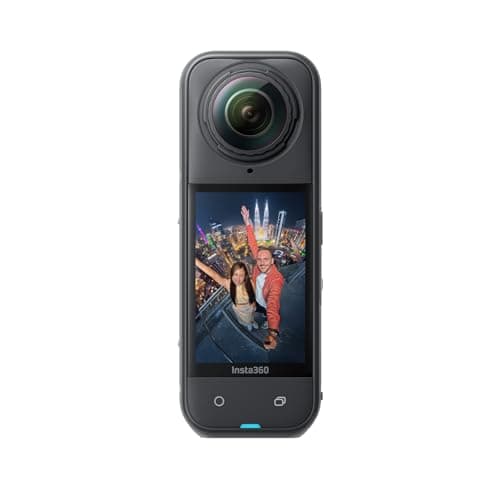
- IP68 to 49ft (15m)
- 2400mAh · ~88 min at 8K30
- User-replaceable
- 9.5
- 9.5
- 9.0
- 8.5
- 7.5
Insta360 X5
Insta360
15m rated, replaceable lenses, and the one camera that means you never have to aim while you are paddling.
Anyone filming themselves on the water who cannot stop to frame a shot
- 15m IP68 is the deepest bare rating of any camera on this site
- User-replaceable lenses — the single biggest fix for the 360 format's worst failure mode
- 185 minutes in Endurance mode at 5.7K24, which is a whole day of clips
- Invisible-selfie-stick reframing means you point the camera at nothing and pick the angle later
- Exposed lenses still scratch; lens guards are a purchase, not an option
- Every clip needs a reframing pass before anyone else can watch it
- 8K30 files are large and the edit is slower than flat footage
Specs from CineD, Insta360 X5 announcement with published specifications.
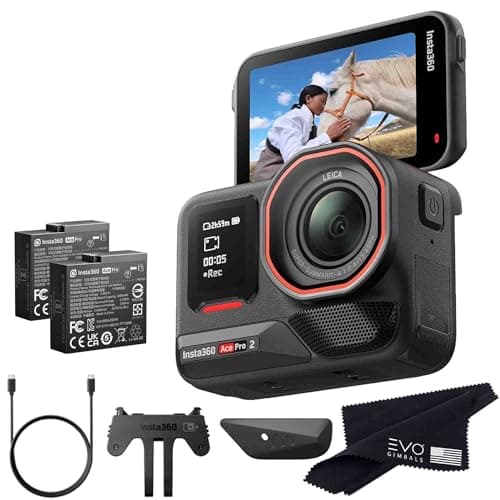
- 39ft (12m) / 60m with dive case
- 1800mAh · 180 min published
- 1/1.3" with Leica lens
- 8.5
- 8.5
- 9.0
- 7.5
- 9.5
Insta360 Ace Pro 2
Insta360
The best-looking image of the three flagships, with a flip screen that finally makes a chest-mounted shot something you can frame.
Family trips where you want the footage to look like more than dashcam clips
- 8K30 with a 1/1.3-inch sensor — the most detail in the group
- 12m bare, which clears every snorkel depth without a housing
- 180-minute published battery life and 80% charge in 18 minutes
- Flip screen means you can frame a shot you are standing in front of
- 12m is still short of the DJI's 20m
- The dive case is a separate purchase for anything past 12m
- Fewer mount options than GoPro, and an adapter tax if you switch
Specs from Insta360 Ace Pro 2 published specifications.
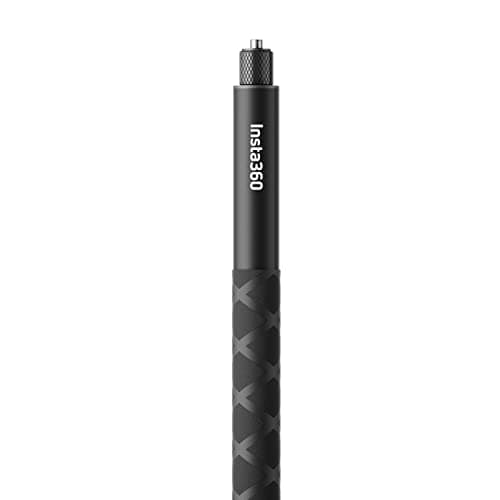
- 23.3cm to 114.1cm
- Aluminum
- 1/4-20 screw
- 6.5
- 9.0
- 7.0
- 9.0
- 7.0
Insta360 114cm Invisible Selfie Stick
Insta360
The pole that disappears in a 360 shot — the single accessory that makes a 360 camera worth owning on the water.
Third-person paddling shots from an X-series camera
- Vanishes from 360 footage, which is the whole reason the format works for self-filming
- Collapses to 23cm and stows in a deck bag
- Standard 1/4-20, so it takes more than just Insta360 cameras
- Light enough to hold out one-handed while the other hand paddles
- Insta360 says plainly it is not designed for high-speed adventures
- Aluminum sections seize if you put them away wet and salty
- It does not float, and a dropped pole with a camera on it sinks fast
Specs from Insta360 114cm Invisible Selfie Stick product page.
02
How we picked
We do not lab-test, bench-test or dive-test cameras, and we do not own test units. What we do instead is read the manufacturer's published specifications, read the independent reviews that genuinely do test, read owner reports for the failure modes specs never mention — fogging, salt corrosion, cold battery collapse, mount slippage — and then weight all of it for 360 cameras used on lake and trail. Where a number is not published, the page says “not published” rather than filling the cell.
The full method, including what we refuse to do, is on the editorial policy page.
- 30%Water survival
- Exposed lenses change the rules — rated depth and lens-guard availability both count.
- 25%Reframing payoff
- A 360 camera is only worth it if the reframing genuinely saves shots you would have missed.
- 20%Battery in the cold
- Stitching two sensors costs power; cold costs more.
- 15%Mount ecosystem
- Invisible-selfie-stick geometry is the whole trick, and it depends on the mount.
- 10%Edit time
- Every 360 clip needs a pass before anyone can watch it.
03
Questions people actually ask
01Is the Insta360 X5 or the Ace Pro 2 better?
Neither, in the abstract. The X5 is a 360 camera for people who film themselves with nobody to hold the camera, and it has the deeper bare water rating at 15m. The Ace Pro 2 is a flat camera with the largest published sensor in the category and no reframing step. The editing question decides it.
02Which is better underwater, the X5 or the Ace Pro 2?
The X5 on published depth — IP68 to 49ft (15m) against 39ft (12m) — and it also captures the whole scene, which is useful when fish arrive from behind you. The Ace Pro 2 produces the better-looking single shot at the same depth. Both need a red filter rather than extra resolution.
03Which is better in low light?
The Ace Pro 2. A single 1/1.3-inch sensor collects more light for the frame you actually keep than a sphere divided between two lenses does. No manufacturer publishes a measured low-light figure for either camera.
04Does the X5 really shoot 8K?
It captures 8K30 across a full 360-degree sphere. The flat clip you export is a crop out of that, so the finished video is a fraction of the figure — commonly around 4K depending on how wide you reframe. The Ace Pro 2's 8K is 8K of one direction.
05Do I need a selfie stick for the X5?
Effectively, yes. The invisible-selfie-stick effect is the main reason to own a 360 camera, and without a pole you lose the shot the format exists to produce. The X5 is the camera where the accessory is not optional.
04
Read this next
Insta360 X5 vs X4
If you have settled on 360 and now want to know whether the older body is enough.
GoPro HERO13 Black vs Insta360 Ace Pro 2
The flat-camera fight, with GoPro's mount ecosystem on the other side.
360 camera vs action camera
The format decision in full, including the resolution arithmetic.
The best 360 camera for kayaking
Where the X5 earns its place, and the deck setup it needs.
Filming a kayak adventure on a 360 camera
What the reframing workflow actually involves before you buy into it.
05
Sources
- CineD, Insta360 X5 announcement with published specifications
- Insta360 Ace Pro 2 published specifications
- Insta360 114cm Invisible Selfie Stick product page
Specifications are quoted from the manufacturer pages above as they read on the dates shown. Where a figure is not published, this site says so rather than estimating one. We have not tested these products.