GoPro HERO13 Black vs Insta360 Ace Pro 2
One is built around an ecosystem. One is built around an image. Both are flat cameras rated for water, so the decision is narrower than it looks.
Part of Cameras.
We earn a commission if you buy through our links, at no extra cost to you. It never changes what we recommend or the order we rank it in — how this works.
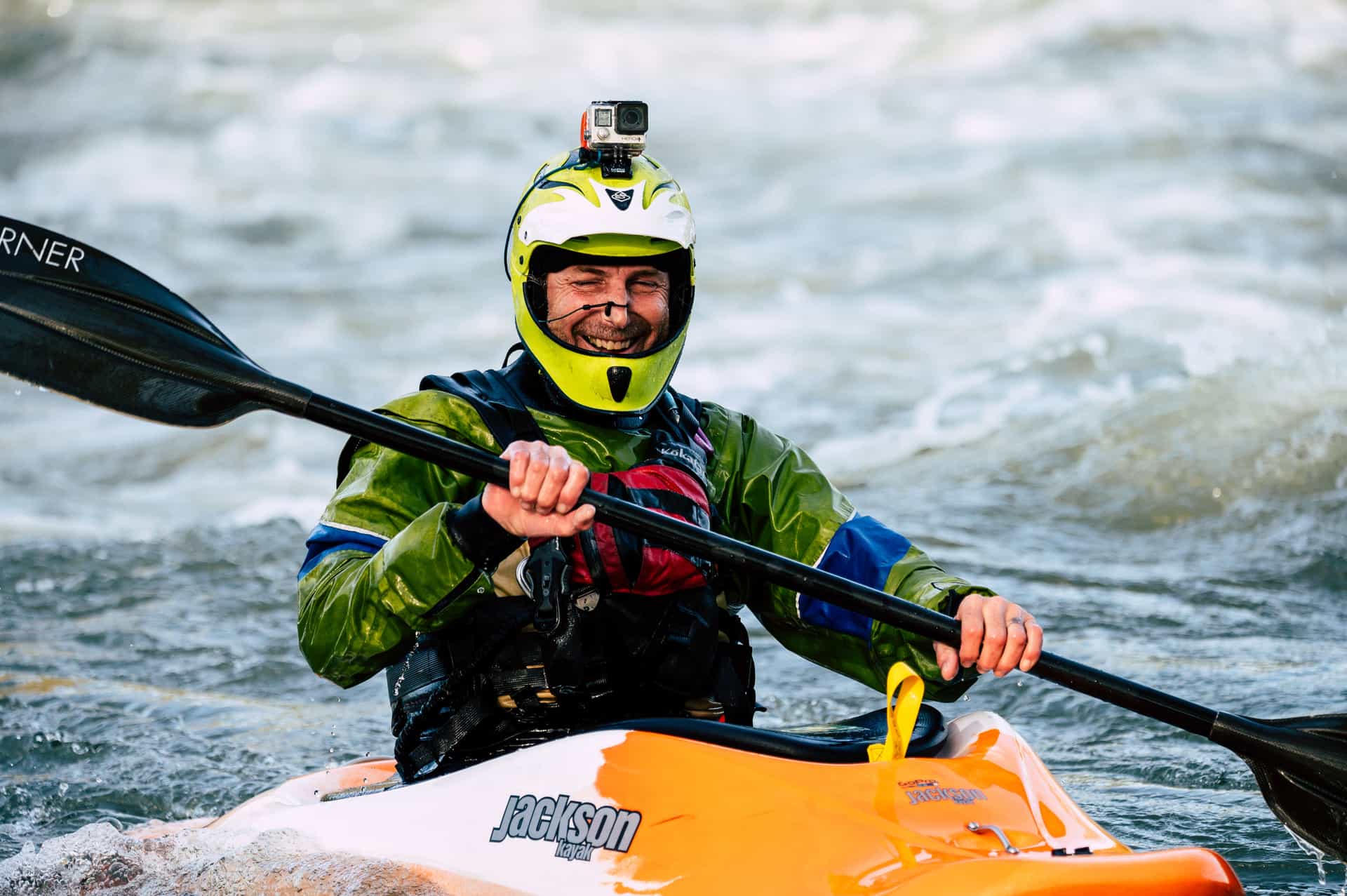
Buy the GoPro HERO13 Black if the camera has to mount to things, and the Insta360 Ace Pro 2 if the footage has to look its best. GoPro publishes 33ft (10m) of bare water rating, a 1900mAh Enduro battery rated for full functionality down to 14°F (-10°C), HyperSmooth 6.0 with AutoBoost and the deepest mount catalog in the category, including a replaceable lens cover and the HB-Series lens mount. Insta360 publishes a 1/1.3-inch sensor behind a Leica lens, 8K30 capture, 39ft (12m) bare, a 180-minute battery figure with 80% charge in 18 minutes, and a flip screen. For lake and trail use the GoPro is the safer default; the Ace Pro 2 wins on image and on self-framing.
The specifications, side by side
| GoPro HERO13 Black | Insta360 Ace Pro 2 | |
|---|---|---|
| Bare waterproof | 33ft (10m) | 39ft (12m) |
| With a case | 196ft (60m) Protective Housing | 60m dive case |
| Published sensor size | Not published | 1/1.3" with Leica lens |
| Headline video | 5.3K | 8K30 |
| Battery | 1900mAh Enduro, removable | 1800mAh, removable |
| Published runtime | 1.5h at 5.3K30 / 2.5h at 1080p30 | 180 min published |
| Fast charge | Not published | 80% in 18 minutes |
| Stabilization | HyperSmooth 6.0 + AutoBoost | FlowState |
| Screens | Rear touchscreen + front screen | Rear flip screen |
| Lens protection | Replaceable lens cover | No replaceable cover published |
| Mounting | Folding fingers + 1/4-20 | Adapter-based, 1/4-20 |
Where the GoPro wins
Mounting, and it is not close. The HERO13 Black has folding fingers built into the body and a 1/4-20 thread underneath, which means it fits a kayak boom, a track mount, a helmet mount, a chest harness, a clamp and a normal tripod with nothing bought in between. Insta360's mount story is adapter-based, and an adapter is both a purchase and a failure point. If your camera lives on hardware — which on this site it does — that difference shows up every single trip. The compatibility map is in what fits what.
The replaceable lens cover. A $20 part instead of a $400 one, on the surface most likely to meet a rock, a paddle blade or a dock. Nothing in the Ace Pro 2 specifications we read offers the equivalent.
Stabilization in chop. HyperSmooth 6.0 with AutoBoost is the steadiest system we can find published figures for, and the difference is visible from a hull or a handlebar rather than on a tripod. The stabilization comparison has the full account of all three systems.
Cold. GoPro rates the Enduro cell for full functionality down to 14°F (-10°C). Insta360 does not publish an equivalent figure for the Ace Pro 2 on the page we read, so we are not going to guess at one.
Where the Insta360 wins
Sensor size, which is the one spec that predicts image quality. Insta360 publishes a 1/1.3-inch sensor behind a Leica-branded lens. GoPro publishes no sensor figure for the HERO13 Black on its specification page, which is a fact rather than an accusation — it simply means the comparison cannot be made on the number that matters. Where published sensor sizes can be compared, 1/1.3-inch is the largest in the category, and that is why the Ace Pro 2 leads our low-light ranking.
Resolution. 8K30 against 5.3K. Most footage does not need it — a phone and a television both show less — but it is real headroom if you crop or reframe in an edit.
The flip screen. The genuinely useful one. A flip screen means you can frame a shot you are standing in front of, which a front status screen approximates and does not replace. For anyone filming themselves or their family handheld, it changes the hit rate.
Bare depth, slightly. 39ft (12m) against 33ft (10m). Both clear every snorkeling depth without a housing, so this is a tiebreaker rather than a reason — and if you go deeper than either, see how deep an action camera really goes.
Where they are effectively the same
Both are flat cameras you have to aim. Neither offers the reframe-afterwards trick, which is a 360 property. If pointing the camera is the problem you want solved, the comparison you want is 360 camera vs action camera.
Both need a housing for real depth. GoPro's Protective Housing publishes 196ft (60m); Insta360's dive case publishes 60m. Equivalent, and both bring the same fogging risk in cool air.
Both need a fast card. At 8K or 5.3K the write is sustained, and a card below V30 will stop a recording on its own. That is the third pick above, and it is the cheapest insurance on either body.
Both have removable batteries. 1900mAh against 1800mAh is not a difference you will notice; the published runtime figures are measured at different settings and are not directly comparable.
Which one for which use
Kayaking, boating, fishing: the HERO13 Black, for mounting and for the lens cover. The full ranking is in the kayaking roundup.
Mountain biking, helmet or bar: the HERO13 Black, for stabilization and mount choice.
Family trips and travel video: the Ace Pro 2, for the sensor and the flip screen — unless the camera is going on a chest harness all day, in which case the mount advantage wins again.
Dawn, dusk and shade: the Ace Pro 2 on published sensor size, with the caveat that nobody publishes a measured low-light figure for either camera.
Snorkeling: either. Both clear the depth bare; add a red filter rather than a housing.
01
The two cameras, and the card both of them need
Either body is a genuinely good camera. The card is the part people skip and then blame the camera for, because both of these write at bitrates a slow card cannot sustain.
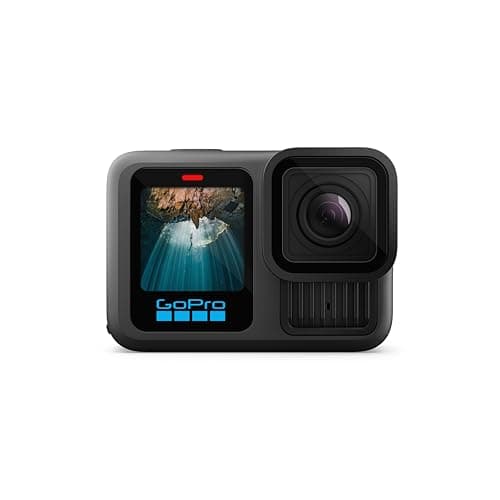
- 33ft (10m), no housing
- 1900mAh Enduro
- 1.5h at 5.3K30 / 2.5h at 1080p30
- 8.0
- 9.5
- 8.5
- 9.5
- 9.0
GoPro HERO13 Black
GoPro
The safest default for lake and trail: 33ft without a housing, the steadiest footage in the category, and a mount for literally everything.
Anyone who wants one camera to handle the kayak, the bike and the family trip
- HyperSmooth 6.0 with AutoBoost is the steadiest stabilization we can find published figures for
- Built-in mounting fingers plus 1/4-20 threads — it fits the GoPro ecosystem and a normal tripod
- Enduro battery is rated to keep full camera functionality down to 14°F (-10°C)
- Replaceable lens cover, so a scratched lens is a $20 problem and not a $400 one
- 33ft is shallower than the DJI and it is the shallowest of the three flagships
- Anything past 33ft needs the separate Protective Housing
- HB-Series lenses and ND filters are all extra purchases
Specs from GoPro HERO13 Black published specifications.
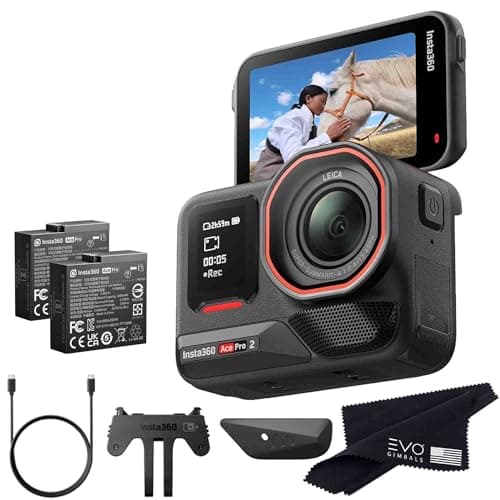
- 39ft (12m) / 60m with dive case
- 1800mAh · 180 min published
- 1/1.3" with Leica lens
- 8.5
- 8.5
- 9.0
- 7.5
- 9.5
Insta360 Ace Pro 2
Insta360
The best-looking image of the three flagships, with a flip screen that finally makes a chest-mounted shot something you can frame.
Family trips where you want the footage to look like more than dashcam clips
- 8K30 with a 1/1.3-inch sensor — the most detail in the group
- 12m bare, which clears every snorkel depth without a housing
- 180-minute published battery life and 80% charge in 18 minutes
- Flip screen means you can frame a shot you are standing in front of
- 12m is still short of the DJI's 20m
- The dive case is a separate purchase for anything past 12m
- Fewer mount options than GoPro, and an adapter tax if you switch
Specs from Insta360 Ace Pro 2 published specifications.
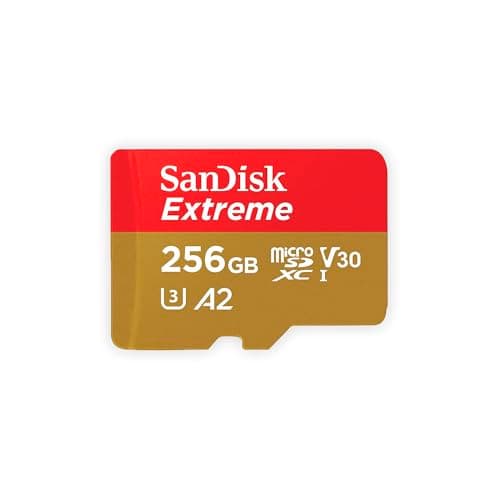
- U3 · V30 · A2 · Class 10
- Up to 190MB/s read, 130MB/s write
- Shock, temperature, water and X-ray proof
- 8.5
- 9.5
- 9.0
- 9.0
- 8.0
SanDisk Extreme microSDXC UHS-I
SanDisk
The card that appears on every manufacturer compatibility list, rated V30 and built to survive being wet, cold and dropped.
Anyone who does not want to think about cards again
- V30 guarantees a 30MB/s minimum sustained write, which is what high-bitrate video actually needs
- SanDisk publishes shockproof, temperature-proof, waterproof and X-ray-proof ratings
- Appears on GoPro, DJI and Insta360 tested-card lists more often than any other card
- Capacities up to 1TB, so a long trip does not need a card swap
- Write speeds vary by capacity — the 64GB tops out at 80MB/s write, the 128GB at 90MB/s
- Counterfeits are common; buy from a seller you trust
- V30 is the floor, not the ceiling — 8K on some cameras wants more headroom
Specs from SanDisk Extreme microSDXC UHS-I product page.
02
How we picked
We do not lab-test, bench-test or dive-test cameras, and we do not own test units. What we do instead is read the manufacturer's published specifications, read the independent reviews that genuinely do test, read owner reports for the failure modes specs never mention — fogging, salt corrosion, cold battery collapse, mount slippage — and then weight all of it for action cameras used on lake and trail. Where a number is not published, the page says “not published” rather than filling the cell.
The full method, including what we refuse to do, is on the editorial policy page.
- 30%Water survival
- Rated depth without a case, door design, and what the manufacturer actually publishes.
- 25%Stabilization in chop
- A kayak deck and a rooty trail shake in ways a handheld walk test never shows.
- 20%Battery in the cold
- Published runtime, spare-battery cost, and whether it charges while recording.
- 15%Mount ecosystem
- Finger mount, threaded, magnetic — and how much of it you have to re-buy.
- 10%Footage you will keep
- Lens replaceability, low-light behavior, and how much cutting the footage needs.
03
Questions people actually ask
01Is the Insta360 Ace Pro 2 better than the GoPro HERO13 Black?
On image specifications, yes — it publishes a 1/1.3-inch sensor with a Leica lens and 8K30 capture, against no published sensor size and 5.3K for the GoPro. On mounting, stabilization, cold rating and lens protection the HERO13 Black is ahead. Which is "better" depends on whether your camera lives on a mount or in a hand.
02Which one is more waterproof?
The Ace Pro 2, slightly: 39ft (12m) bare against 33ft (10m). Both have a 60m case available, and both clear snorkeling depths with no housing at all.
03Does the Ace Pro 2 fit GoPro mounts?
Through an adapter rather than natively. The HERO13 Black has folding mounting fingers built into the body; Insta360 bodies generally mount via an adapter or cage, which is an extra purchase and an extra part to lose.
04Which has better battery life?
The published figures are not directly comparable: Insta360 lists 180 minutes for the Ace Pro 2 and 80% charge in 18 minutes, while GoPro lists 1.5 hours at 5.3K30 and 2.5 hours at 1080p30 for a 1900mAh Enduro cell. Both are removable, so a spare settles the question either way.
05Which should I buy for kayaking?
The HERO13 Black. Mounting options and a replaceable lens cover matter more on a boat than sensor size does, and the deciding factors are set out in the kayaking roundup.
04
Read this next
Insta360 X5 vs Ace Pro 2
The same Insta360 body against its own 360 sibling, which is the other real alternative.
GoPro HERO13 Black: the published specs
Every figure for the GoPro half of this comparison, with the date read.
Insta360 Ace Pro 2: the published specs
The same for the Insta360 half, including the dive case rating.
The best action camera for low light
Where the sensor difference between these two actually shows.
GoPro vs Insta360 vs DJI
The three-way version, with DJI added back in.
05
Sources
- GoPro HERO13 Black published specifications
- Insta360 Ace Pro 2 published specifications
- SanDisk Extreme microSDXC UHS-I product page
Specifications are quoted from the manufacturer pages above as they read on the dates shown. Where a figure is not published, this site says so rather than estimating one. We have not tested these products.