The best action cameras for boating and tubing
A powerboat is a windier, louder, faster problem than a kayak. The camera matters; the mount matters more.
Part of On the Water.
We earn a commission if you buy through our links, at no extra cost to you. It never changes what we recommend or the order we rank it in — how this works.
01
Quick picks
| # | Product | Best for | Score | Price |
|---|---|---|---|---|
| 01 | GoPro HERO13 Black The safest default for lake and trail: 33ft without a housing, the steadiest footage in the category, and a mount for literally everything. | Anyone who wants one camera to handle the kayak, the bike and the family trip | 8.8/ 10 | |
| 02 |  DJI Osmo Action 5 Pro Goes to 20m with no housing at all and publishes a 240-minute runtime — the two numbers that decide a long, wet, cold day. | Long paddles, cold water, and anyone tired of buying a housing to get past 10m | 9.1/ 10 | |
| 03 |  Insta360 X5 15m rated, replaceable lenses, and the one camera that means you never have to aim while you are paddling. | Anyone filming themselves on the water who cannot stop to frame a shot | 9.1/ 10 | |
| 04 | 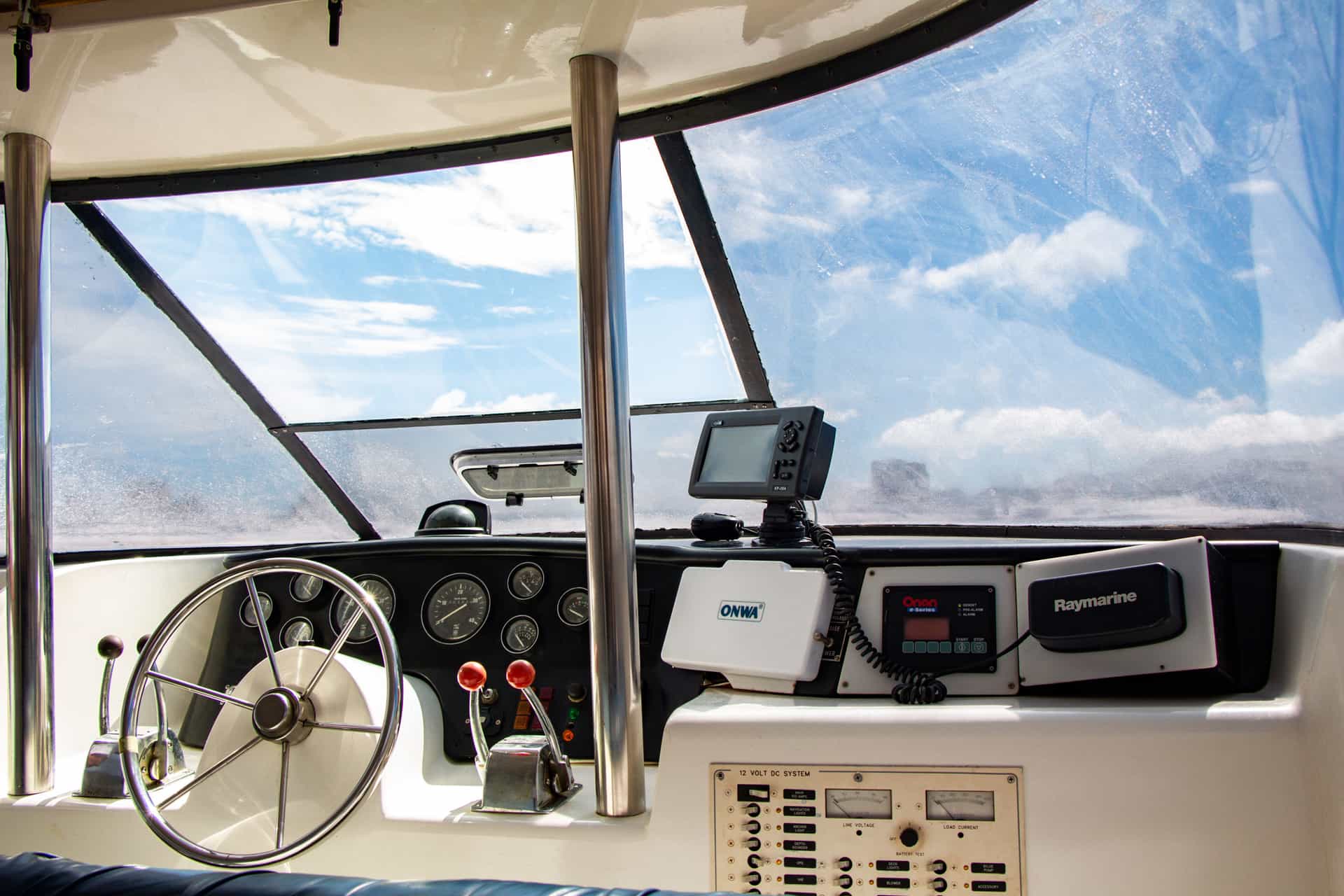 GoPro Suction Cup Mount Proven at 150+ mph on a car, which means it will hold on a boat hull — as long as the surface is genuinely smooth and genuinely clean. | Powerboats, pontoons and any smooth hull you will not drill | 8.0/ 10 | |
| 05 |  AKASO Brave 8 Lite Two batteries and a bag of mounts in the box at a fraction of flagship money — buy it knowing the stabilization gives up first. | A pool, a calm lake, a first camera you are not precious about | 7.4/ 10 |
Scores are our editorial judgment from published specs and named independent reviews, weighted for lake and trail use — not measurements. We have not tested these units and do not own them.
02
How we picked
We do not lab-test, bench-test or dive-test cameras, and we do not own test units. What we do instead is read the manufacturer's published specifications, read the independent reviews that genuinely do test, read owner reports for the failure modes specs never mention — fogging, salt corrosion, cold battery collapse, mount slippage — and then weight all of it for action cameras used on lake and trail. Where a number is not published, the page says “not published” rather than filling the cell.
The full method, including what we refuse to do, is on the editorial policy page.
- 30%Water survival
- Rated depth without a case, door design, and what the manufacturer actually publishes.
- 25%Stabilization in chop
- A kayak deck and a rooty trail shake in ways a handheld walk test never shows.
- 20%Battery in the cold
- Published runtime, spare-battery cost, and whether it charges while recording.
- 15%Mount ecosystem
- Finger mount, threaded, magnetic — and how much of it you have to re-buy.
- 10%Footage you will keep
- Lens replaceability, low-light behavior, and how much cutting the footage needs.
What a powerboat does that a kayak does not
Three things change once there is an engine involved, and each one breaks a different assumption.
Wind. At 25 knots the apparent wind over a deck-mounted camera is a constant roar, and the onboard microphone records essentially nothing else. This is the single biggest difference from paddling footage, and it is mostly unfixable at the camera — even a good external mic struggles. Most good boating footage uses music.
Vibration. An engine puts a continuous high-frequency buzz into every hard mounting point, on top of the slap of the hull. Suction cups and adhesive pads transmit it; a ball-and-socket arm with some mass damps it.
Speed. Anything that comes loose is gone immediately and is not coming back. Tethers stop being optional.
Where to put the camera
On the bow, looking back. The classic boating shot: the boat, the wake, the people. Needs a suction cup or a rail clamp, and needs the lens wiped every few minutes because bow spray is relentless.
On the tower or the A-frame, looking down. The best angle for watersports — wakeboarding, tubing, skiing — because it shows the rider and the wake together. A clamp mount on tubing is the right tool.
On the tow rope or the tube itself. Genuinely the most fun angle and the one most likely to lose a camera. Float, tether, and check both twice.
Handheld from the stern. Underrated. A floating grip lets you dip the lens into the wake for a half-in, half-out shot that no fixed mount can get.
Tubing and watersports specifically
Tubing is the one activity in this section where the camera is genuinely going in the water, repeatedly and at speed. Three things follow.
Use the deepest-rated camera you have, and fit a float even so. Mount to the tube's handle webbing rather than to the inflated surface, which flexes and pulls adhesive off. And accept that the best shot is usually not the one pointing at the rider — a camera facing back at the boat, with the rider's hands in frame, tells the story far better than a face shot of somebody squinting.
The audio problem, honestly
Most people filming a boat day want the engine note and the laughing, and what they get is wind. There is no good in-camera fix. The realistic options are: accept it and use music; record voices separately on a phone in a pocket and sync them later; or shoot the talking parts at idle or at the dock, where the wind goes away and the audio suddenly works.
03
Every pick, in detail
- 33ft (10m), no housing
- 1900mAh Enduro
- 1.5h at 5.3K30 / 2.5h at 1080p30
- 8.0
- 9.5
- 8.5
- 9.5
- 9.0
GoPro HERO13 Black
GoPro
The safest default for lake and trail: 33ft without a housing, the steadiest footage in the category, and a mount for literally everything.
Anyone who wants one camera to handle the kayak, the bike and the family trip
Boating is a stabilization problem more than a depth problem — a hull at speed shakes in a way nothing else on this site does. HyperSmooth 6.0 with AutoBoost handles it best of anything here, and the mount ecosystem means there is a fitting for every rail, windscreen and tower on the boat.
- HyperSmooth 6.0 with AutoBoost is the steadiest stabilization we can find published figures for
- Built-in mounting fingers plus 1/4-20 threads — it fits the GoPro ecosystem and a normal tripod
- Enduro battery is rated to keep full camera functionality down to 14°F (-10°C)
- Replaceable lens cover, so a scratched lens is a $20 problem and not a $400 one
- 33ft is shallower than the DJI and it is the shallowest of the three flagships
- Anything past 33ft needs the separate Protective Housing
- HB-Series lenses and ND filters are all extra purchases
Specs from GoPro HERO13 Black published specifications.
- 20m bare / 60m with case
- 1950mAh · 240 min at 1080p24
- -20° to 45°C
- 9.5
- 9.0
- 9.5
- 8.0
- 9.0
DJI Osmo Action 5 Pro
DJI
Goes to 20m with no housing at all and publishes a 240-minute runtime — the two numbers that decide a long, wet, cold day.
Long paddles, cold water, and anyone tired of buying a housing to get past 10m
The pick if the camera spends time in the water as well as on the boat — tubing, wakeboarding, someone holding it over the side. 20m bare means a drop off a moving boat is a recovery problem rather than a write-off, assuming you fitted a float.
- 20m without the Waterproof Case — double the bare-camera depth of the HERO13 Black
- DJI publishes 240 minutes of recording at 1080p/24 with screens off, the longest figure in this set
- Rated to -20°C, which matters more on an October lake than any resolution number
- 1/1.3-inch sensor holds detail when the light goes flat
- Mount ecosystem is smaller than GoPro's, and magnetic quick-release adapters are their own purchase
- 146g — the heaviest of the flagship three
- Fewer third-party mounts and filters exist for it
Specs from DJI Osmo Action 5 Pro published specifications.
- IP68 to 49ft (15m)
- 2400mAh · ~88 min at 8K30
- User-replaceable
- 9.5
- 9.5
- 9.0
- 8.5
- 7.5
Insta360 X5
Insta360
15m rated, replaceable lenses, and the one camera that means you never have to aim while you are paddling.
Anyone filming themselves on the water who cannot stop to frame a shot
On a boat you are usually surrounded by things worth filming in every direction at once. A 360 camera on a short pole in the middle of the deck records all of it, and you pick the angle later. It also solves the problem of nobody wanting to be the one holding the camera.
- 15m IP68 is the deepest bare rating of any camera on this site
- User-replaceable lenses — the single biggest fix for the 360 format's worst failure mode
- 185 minutes in Endurance mode at 5.7K24, which is a whole day of clips
- Invisible-selfie-stick reframing means you point the camera at nothing and pick the angle later
- Exposed lenses still scratch; lens guards are a purchase, not an option
- Every clip needs a reframing pass before anyone else can watch it
- 8K30 files are large and the edit is slower than flat footage
Specs from CineD, Insta360 X5 announcement with published specifications.
- Proven at speeds of 150+ mph
- Smooth, non-porous, clean
- Swivel arm, 360-degree positioning
- 8.0
- 7.0
- 8.0
- 9.5
- 7.5
GoPro Suction Cup Mount
GoPro
Proven at 150+ mph on a car, which means it will hold on a boat hull — as long as the surface is genuinely smooth and genuinely clean.
Powerboats, pontoons and any smooth hull you will not drill
Included here as a pick rather than an afterthought, because on a boat the mount is the decision. GoPro publishes a 150+ mph figure, so wind is not what makes it fail — texture, grit and a hot day are. Clean the surface properly, and tether it regardless.
- No drilling, no permanent change to the boat
- GoPro publishes a 150+ mph figure, so wind load is not the failure mode
- Repositionable in seconds, which is how you find the angle that works
- Packs flat and moves between boats
- Gelcoat texture, decals and any grit under the cup all reduce the hold
- Temperature swings can break the seal over a long day in the sun
- It will eventually let go — this is the mount that most needs a tether
Specs from GoPro Suction Cup product page.
- IPX8 10m / 60m with case
- 2 × 1550mAh included
- 140 min at 4K / 150 min at 1080p
- 7.5
- 6.5
- 8.0
- 8.5
- 6.5
AKASO Brave 8 Lite
AKASO
Two batteries and a bag of mounts in the box at a fraction of flagship money — buy it knowing the stabilization gives up first.
A pool, a calm lake, a first camera you are not precious about
Two batteries and a set of mounts in the box makes this an easy second angle for the boat — the camera you clamp somewhere and forget. Its stabilization is the weak point, and a boat at speed is exactly where that shows.
- IPX8 to 10m bare, which matches the HERO13 Black's rating on paper
- Ships with two batteries, a charger and seven mounts — nothing else to buy on day one
- 4K60 and dual screens at a price well under the flagships
- Uses GoPro-standard two-prong mounting, so the whole accessory world fits
- SuperSmooth stabilization is a step behind HyperSmooth and RockSteady in chop
- The 60m rating belongs to the separate housing, not the camera
- Low light is where the price shows most
Specs from AKASO Brave 8 Lite published specifications.
04
What decides this category
Stabilization first
Engine vibration plus hull slap is the hardest stabilization problem on this site. It is the one criterion where spending more produces an immediately visible difference, and it is why the HERO13 Black leads this list rather than a deeper-rated body.
The mount, and then the tether
Match the mount to the surface: suction for smooth gelcoat and windscreens, a clamp for rails and tower tubing, adhesive only where you are certain about the position. Then tether whatever you chose. At speed there is no recovery.
Depth rating, if anyone is going in
For a camera that stays on the boat, 10m is irrelevant overkill. For tubing, wakeboarding or anything where the camera goes in with a person, take the deeper rating and add a float.
What we would skip
An external microphone, at least to begin with. Wind on a moving boat defeats most of them, and the money is better spent on a second mount so you have two angles to cut between.
05
Questions people actually ask
01Will a suction cup mount hold on a boat?
Yes, on a smooth, clean, non-porous surface — GoPro publishes a 150+ mph figure for its suction cup, so the airflow is not the problem. Texture, grit, sunscreen and heat are. Clean the spot, press firmly, and always add a tether.
02How do I stop wind noise on boating footage?
You mostly cannot, at speed. The practical options are music, recording voices separately and syncing them, or shooting the talking at idle. An external mic helps at low speed and struggles at planing speed.
03What is the best camera angle for tubing?
Facing back toward the boat from the tube, with the rider's hands in frame. It shows speed, spray and the rope tension all at once, which a face-on shot never does. Mount to the handle webbing, not to the inflated surface.
04Do I need a waterproof camera if it stays on the boat?
Yes, but not a deep one. Bow spray, rain and the occasional wave over the gunwale are constant; a 10m bare rating is far more than enough for anything that never leaves the deck.
05Where should I mount a camera on a pontoon boat?
A rail clamp on the front or side rail is usually the best combination of angle and stability, and pontoon rails are almost always within a standard clamp's jaw range. Avoid the bimini frame, which flexes and buzzes.
06
Read this next
Suction cup and clamp mounts
Which one holds on which surface, and where each one fails.
Floats, tethers and not losing your camera
At speed, the tether is the difference between a scare and a loss.
Best action cameras for kayaking
The quieter, slower version of the same problem.
Microphones for action cameras
What an external mic does and does not fix in wind.
Best settings for water
Shutter, frame rate and the settings that survive bright water.
07
Sources
- GoPro Suction Cup mount product page
- RAM Mounts Tough-Claw with Action Camera Adapter specifications
- GoPro HERO13 Black published specifications
- DJI Osmo Action 5 Pro published specifications
- CineD, Insta360 X5 announcement with published specifications
- AKASO Brave 8 Lite published specifications
Specifications are quoted from the manufacturer pages above as they read on the dates shown. Where a figure is not published, this site says so rather than estimating one. We have not tested these products.